
Reviewed · WORKSHOPS
Surfing Lessons in Madeira
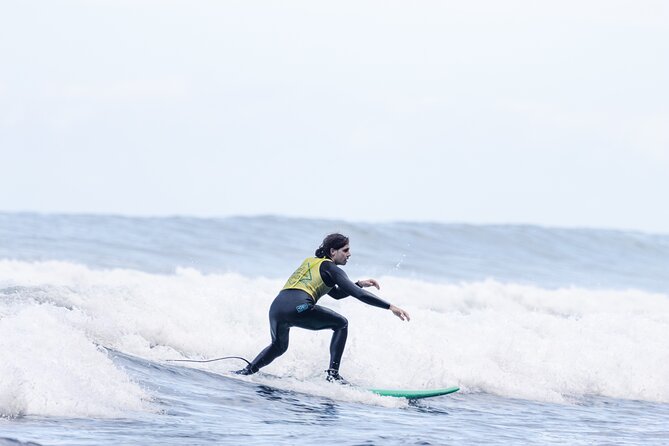
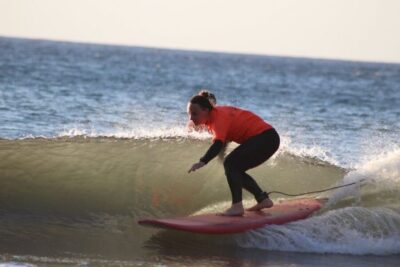
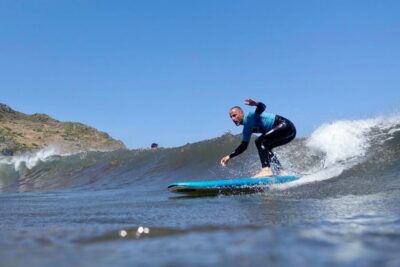
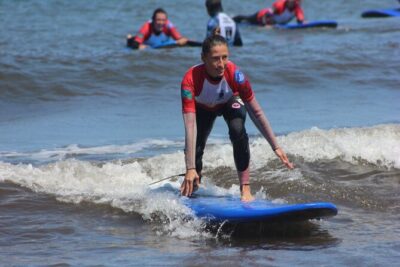
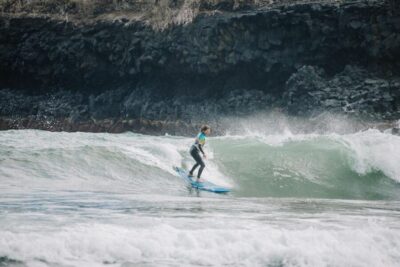
Madeira’s north coast gives first-time surfers a sensible place to start: sandy beaches, manageable waves, and a dramatic sea setting at Fajã da Areia. You’ll spend about two hours learning the basics rather than being sent straight into the water with a board and a quick pep talk. The small maximum of six means the instructor can give you useful individual help.
I like two things right away. All surf equipment is included, so you do not need to pack a board or wetsuit. I also like the lesson’s practical order: warm-up, safety, paddling, catching waves, standing up, then stretching. The main consideration is the ocean itself. Conditions can change, and one previous beginner session had bigger waves than expected, so this is not a guaranteed calm-water class.
Key points to know before booking
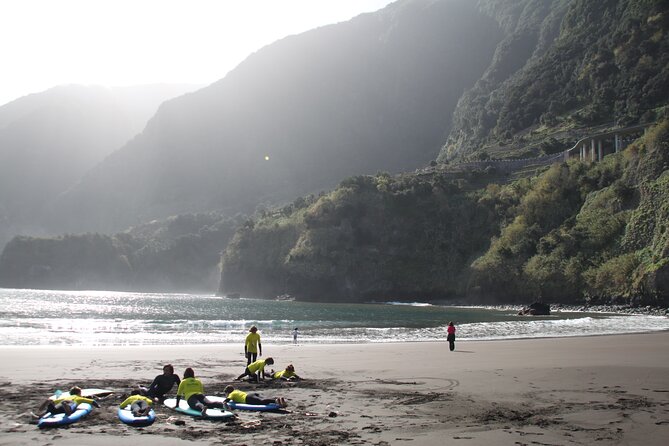
- Madeira’s north coast is the classroom: The lesson takes place at Fajã da Areia in São Vicente, where sandy beaches and small waves are presented as a good setting for beginners.
- A full beginner lesson, not just board rental: You learn how to use the wetsuit and board, paddle, catch waves, stand up, and follow surf etiquette.
- Equipment is included: You can arrive without bringing surf gear.
- Small groups matter: A maximum of six people allows for more direct instruction and correction.
- The session starts at 9:30 am: Plan to be at Madeira Surf Center, not simply somewhere along the north coast.
- Weather can affect the date: Poor conditions or an unmet minimum group size can lead to a new date or a full refund.
Starting at Fajã da Areia in São Vicente
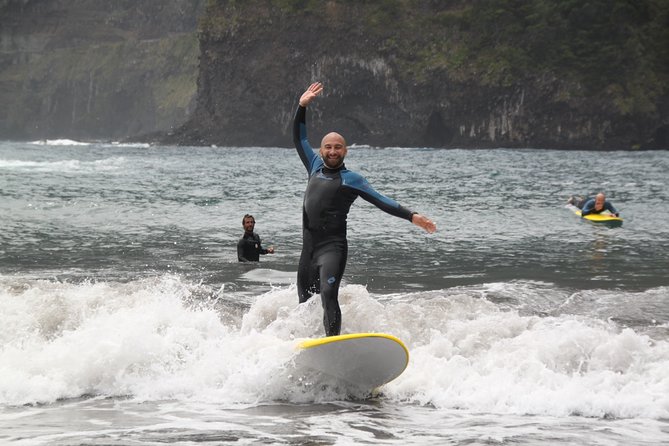
The meeting point is Madeira Surf Center at Baía dos Junços, Fajã da Areia, São Vicente, with a 9:30 am start. This is on Madeira’s north coast, the part of the island selected for its sandy beaches and smaller waves.
That setting matters for a first lesson. Surfing is easier to understand when you can focus on body position and timing instead of worrying about a rough entry or a crowded break. The beach also gives you a more forgiving place to begin learning the basic movements.
The exact transport arrangement is not included in the details provided, so you should plan your own way to the meeting point. The activity begins and ends there. It does not include a separate pickup or a trip around the island.
Arrive ready for an active morning. The confirmed start time is 9:30 am, and the lesson lasts about two hours. You should allow enough time to find Madeira Surf Center and get organized before the class begins.
More surfing lessons in Madeira:
- Funchal: Madeira Island Group Surf Lesson
★ 4.7 · 282 reviews - Madeira: Surf Lessons for All Levels
★ 4.8 · 191 reviews - Madeira Surfing Lessons – Aroundfreedom Surf School
★ 5.0 · 104 reviews
Getting into the wetsuit and understanding the equipment
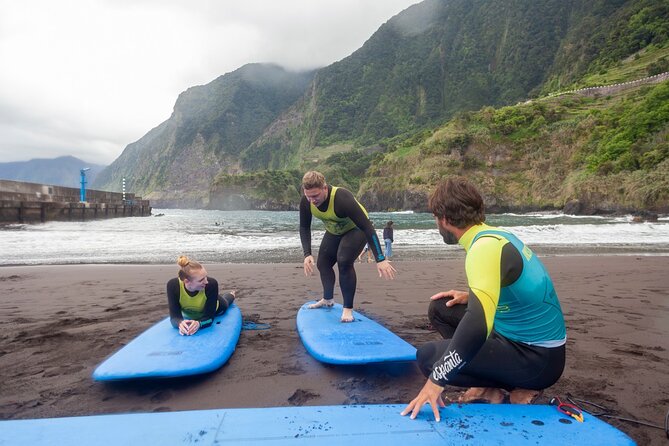
The first part of the lesson helps you get comfortable with the gear. You learn how to put on a surf wetsuit and what a surfboard is used for. That may sound basic, but it removes a lot of uncertainty for a first-timer.
A wetsuit can feel awkward when you first put it on, and a surfboard is not simply a large floating platform. Your instructor will help you understand the equipment before asking you to use it in the water. This is useful if you have never surfed, or if your only previous experience was standing on a board during a holiday activity.
The rental equipment is included in the lesson. That adds real value because surf gear is bulky and unfamiliar, especially if you are moving around Madeira with limited luggage. You also avoid the problem of arriving with equipment that is unsuitable for the local conditions.
The information does not specify the exact board type or wetsuit thickness. You should expect the center to provide the necessary surf equipment, but you should not assume that personal items such as towels or swimwear are included unless confirmed separately.
Warm-up, stretching, and the first surf movements
Before you try to catch a wave, the instructor leads a warm-up. You learn how to stretch and prepare your body for the work ahead. This is one of the better features of the lesson because surfing uses more than your arms. Paddling, pushing up, balancing, and standing all happen in quick succession.
The class then introduces the take-off, the movement from lying on the board to standing on it. For most beginners, this is the key moment. It has to be quick and controlled, and small mistakes in hand position or foot placement can send you off balance.
You will also learn how to paddle on the board. Paddling is not just a way to move around. It helps you build enough speed to catch a wave, and it gives you control over your position in the water.
The instructor’s job here is to break surfing into small steps. You are not expected to master everything at once. With a maximum of six people, there is at least a reasonable chance to receive corrections that match your own problems, such as a slow take-off or poor balance.
Surf safety and etiquette before catching waves
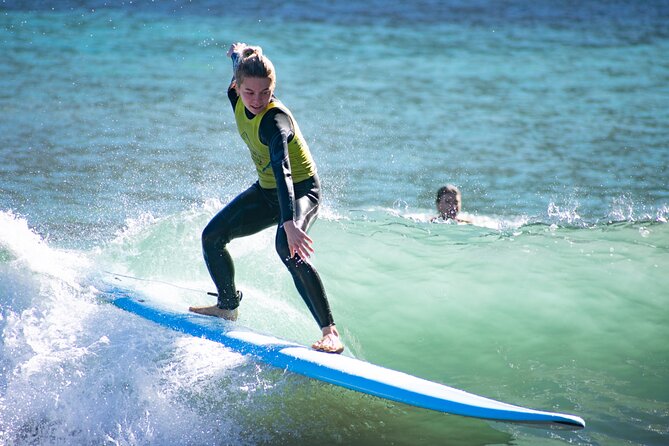
The lesson includes basic rules, safety, and surf etiquette. Do not treat this as filler. A beginner needs to know where to wait, how to handle a board, and how to avoid creating trouble for other people in the water.
Surf etiquette also gives you a better sense of responsibility. Waves are shared, and a surfboard can be awkward and powerful when it gets away from you. Learning the rules at the start helps you enjoy the session without putting yourself or someone else in a difficult position.
The lesson is offered in English. The available information does not name the instructor, so you cannot request a particular guide based on the details provided. It does indicate that the instruction covers both complete beginners and people who have surfed before.
That range can work well in a small group, but it also means the pace may not be identical for everyone. A first-timer will need help with the basic movements, while someone with past experience may want more correction or practice. The center’s own description presents the lesson as suitable for both levels, but the main strength is clearly its beginner structure.
A few more Madeira days out worth comparing
- Madeira: surf lesson at Porto da Cruz
★ 4.8 · 67 reviews - Surf lesson in Madeira
★ 4.8 · 55 reviews - Madeira Surf Classes in Portugal
★ 5.0 · 25 reviews - Hands-On Bolo do Caco Baking Class with a Madeiran Family
★ 5.0 · 25 reviews
Learning to catch a wave and stand up
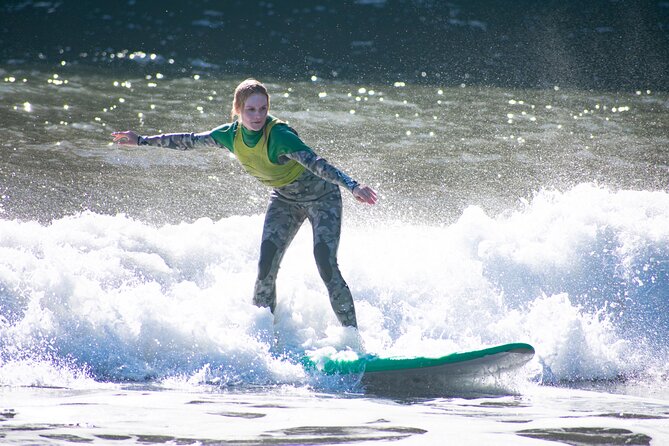
Once you understand the safety points and basic technique, you work on catching waves. The north coast is chosen for its smaller waves and sandy beaches, which should make the first attempts less intimidating than a more exposed surf setting.
Still, you should keep your expectations realistic. Small waves are not the same as flat water. You may catch a wave quickly, or you may spend much of the session learning how to position the board and time your paddle. Surfing has a steep first step, and even a successful stand may last only a few seconds.
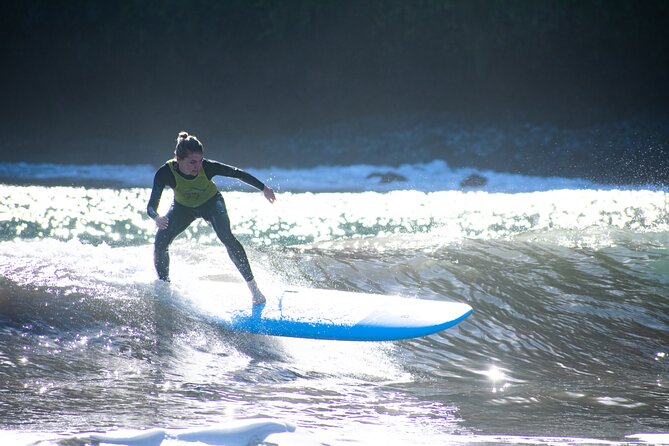
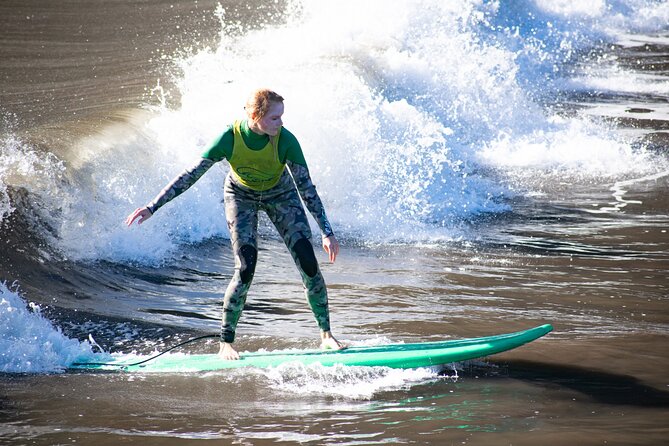
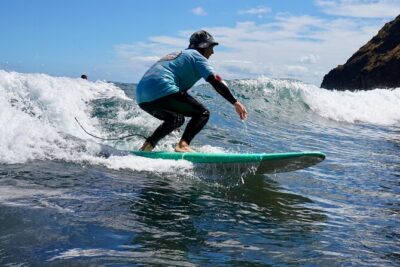
The lesson’s most rewarding moment is likely the first time you move from paddling to standing. That is where the warm-up, take-off practice, and safety guidance come together. You will learn how to catch waves, stand up, and keep your balance as the board moves toward shore.
Conditions can vary. One beginner described the waves as bigger than expected but still found the session enjoyable with support from the instructor. That is a useful warning: book this for an introduction to surfing, not as a promise of perfectly gentle water every time.
What the two-hour format gives you
About two hours is a sensible length for a first lesson. It gives you time to get changed, warm up, learn the rules, practice on the board, and attempt real waves without turning the morning into an endurance test.
Surfing can be tiring, especially when you are paddling repeatedly and getting back on the board after a fall. A longer class is not automatically better. You may learn more from a focused session while you still have enough energy to listen and improve.
The lesson is also structured rather than rushed. You are not simply handed equipment and told to try your luck. The sequence moves from preparation to technique and then to the water. That makes the session easier to follow if you have never surfed.
If you already surf regularly, two hours may feel short. The class can still help with technique, but the strongest value is for beginners and occasional surfers who want a guided start.
Stretching at the end of the session
The final part includes stretching after surfing. This is a small detail, but it gives the lesson a proper finish. You leave with a chance to loosen up after paddling and repeated attempts to stand.
It also reinforces the idea that surfing is a physical skill, not just a photo opportunity. Learning how to warm up and stretch gives you habits you can use in later sessions, even if you surf only once during your Madeira stay.
The activity ends back at the meeting point. There is no separate final stop or included onward transport. That makes the plan simple, but you need to arrange what comes next on your own.
Group size, support, and the overall value
The maximum group size is six. That is one of the most important details to check before booking because surf instruction is much more useful when the teacher can see what each person is doing.
A large class can leave beginners waiting for a turn or repeating the same mistake. A group of six is not a private lesson, but it offers a better balance between social fun and individual attention. The experience is also suitable for most people, according to the participation information provided.
No price is supplied here, so I cannot judge the exact cost. I can judge what is included. You receive the surf equipment, an English-language lesson, safety instruction, warm-up guidance, practical surf skills, and post-surf stretching. If you would otherwise need to rent a board and wetsuit separately, that bundled format may offer good value.
The lesson is especially useful if you want a first taste of surfing without committing to a full course. It gives you the essential movements and lets you decide if you want more practice later.
Weather, cancellations, and what to plan for
Surfing depends on conditions, so the weather policy matters. If poor weather forces a cancellation, you are offered another date or a full refund. The same applies if the minimum number of participants is not reached, with the option of another date or experience, or a full refund.
Your own cancellation policy is stricter. The experience is non-refundable and cannot be changed for personal reasons. If you cancel or request an amendment, the amount paid is not refunded.
That means you should book when your Madeira schedule is fairly settled. Leave some flexibility around the surf lesson if possible, since the operator may need to move it because of weather or group numbers. Confirmation is sent at the time of booking.
Who should book this Madeira surf lesson
I would choose this for a first-time surfer who wants instruction rather than a casual equipment rental. It also suits a small group of friends or family members who want to learn together and appreciate having gear included.
The class is a good match for you if:
- You have never surfed or have only tried once.
- You want an English-language lesson.
- You prefer a small group, with no more than six participants.
- You want the equipment supplied.
- You like learning safety and technique before attempting waves.
- You have a morning available at 9:30 am in São Vicente.
I would think twice if you need a fully private lesson, want advanced coaching, or have a schedule that cannot tolerate a weather-related change. The lesson welcomes more experienced surfers, but its main focus is learning the core skills.
Should you book it?
Book this Madeira Surf Center lesson if you want a practical, beginner-friendly introduction on the north coast. The strongest reasons are the included equipment, small group limit, clear step-by-step structure, and attention to warm-up, safety, and stretching.
Go in expecting a real ocean lesson, not a guaranteed stand-up success. Waves may be larger than planned, and the activity cannot be changed for personal reasons after booking. If you accept those limits, this is a well-shaped way to try surfing in Madeira without bringing your own gear or guessing what to do next.
FAQ
Where does the surfing lesson take place?
The lesson starts at Madeira Surf Center, Baía dos Junços, Fajã da Areia, São Vicente, Madeira, Portugal.
What time does the activity start?
The scheduled start time is 9:30 am.
How long does the lesson last?
The activity lasts approximately two hours.
Is surf equipment included?
Yes. Surf equipment rental is included, so you do not need to bring the surf gear yourself.
What will I learn during the lesson?
You will learn how to wear a surf wetsuit, use a surfboard, warm up, stretch, paddle, catch waves, perform the take-off, stand up, and follow basic safety rules and surf etiquette.
Is the lesson offered in English?
Yes. The experience is offered in English.
How many people can join the lesson?
The activity has a maximum of six participants.
Where does the activity finish?
The lesson ends back at the Madeira Surf Center meeting point.
What happens if the weather is poor or the minimum group size is not reached?
If poor weather causes a cancellation, you will be offered another date or a full refund. If the minimum number of participants is not reached, you will be offered another date or experience, or a full refund.
Just added around Madeira
- Madeira: Wine Safari Jeep Tour with Local Guide★ 3.9 · 6 reviews
- Visiting local Vineyard With Wine Tasting & Lunch included★ 5.0 · 6 reviews
- West Tour Porto Moniz★ 4.6 · 26 reviews
- Funchal: Maderia Island Off Road Jeep Tour with Swim Stop★ 5.0 · 11 reviews
- Tuk Tuk Monte Toboggan – Madeira Island★ 4.1 · 4 reviews
- Tuk Tuk Funchal CR7 – Madeira Island★ 4.8 · 4 reviews
- Full Day Open Roof 4×4 Unforgettable Northwest of Madeira★ 5.0 · 22 reviews
- Tuk Tuk Funchal City – Madeira Island★ 4.8 · 3 reviews
Workshops, compared.
Madeira Surfing Lessons – Aroundfreedom Surf School
Read our review →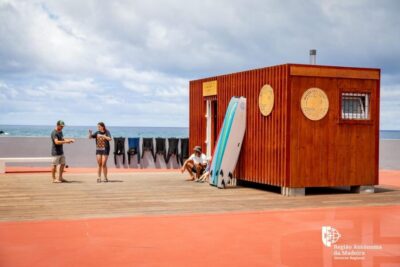

Browse the lists this tour appears in