
Reviewed · WORKSHOPS
Hands-On Bolo do Caco Baking Class with a Madeiran Family
Madeira’s most famous bread is best understood with your hands, not just tasted in a restaurant. In this small home-based class, you knead and shape Bolo do Caco with Tonia’s family, then eat it warm with garlic butter, Portuguese cheese, and chouriço.
I like the tiny group size, capped at five people, and the chance to learn from Tonia’s mother, who has more than 40 years of bread-making experience. I also like the setting: a family kitchen with mountain views, stories, and time around a shared table.
The main thing to consider is the setting itself. This is a real family home, not a polished cooking school, so you should be comfortable with an informal visit and wearing clothes that can handle flour and a little mess.
Key points
- Learn from a family bread maker: Tonia’s mother brings more than 40 years of experience to the class.
- Work with the dough yourself: You knead, shape, and cook the bread rather than simply watching a demonstration.
- Cook Bolo do Caco on hot stone: This traditional method is part of what gives the bread its character.
- Eat a full Madeiran tasting: Warm bread comes with garlic butter, Portuguese cheese, and chouriço.
- Enjoy a private-feeling visit: The group is limited to five people and takes place in a family home.
- Bring the children if useful: Kids and babies are welcome, with room for them to play without interrupting the class.
Making Madeira’s Famous Bread at Home
Bolo do Caco is one of those foods that tells you something about Madeira. It is simple bread, but it is tied to local kitchens, family habits, and the pleasure of serving something warm at the table.
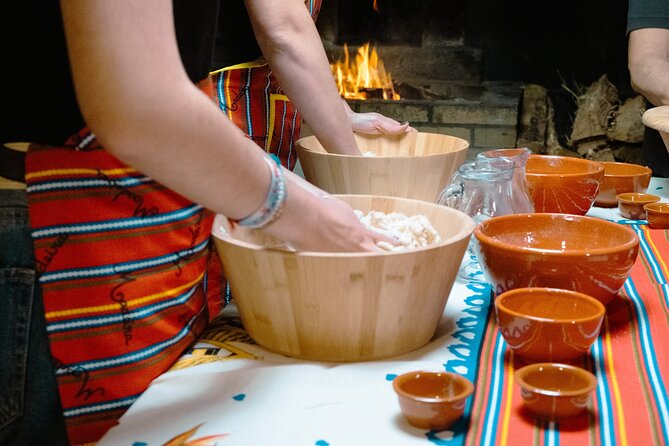
This class gives you a practical way to meet that tradition. You are not sitting through a long food lecture or watching someone else do all the work. You handle the dough, shape the bread, and see how it cooks on a hot stone.
That hands-on part matters. Bread can look easy until you try to judge its texture, work the dough, and form an even piece. The class gives you a chance to ask questions as you go, with Tonia’s mother guiding the process from a lifetime of practice.
The setting also changes the mood. You meet at Travessa do Lombo do Alho in Madeira’s 9360 postal area, then finish at the same place. The home setting and mountain backdrop make this feel more like an invitation into family life than a standard food activity.
More food tours in Madeira:
- Eating Madeira! Wine & Food Tour in Funchal
★ 5.0 · 214 reviews - “Re-Canto” Farm-to-Table with Stunning Views at Madeira
★ 5.0 · 87 reviews - From Market to Plate: visit Funchal market & culinary experience
★ 4.5 · 36 reviews
A Three-Hour Visit With Tonia’s Family
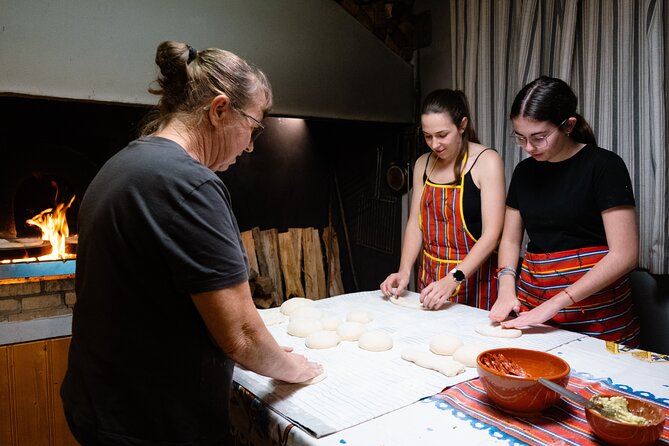
Plan on about three hours. That is enough time to hear about Bolo do Caco, work through the baking steps, sit down to eat, and enjoy conversation without having to rush through the meal.
Tonia helps welcome you into the family setting, while her mother brings the bread-making experience. One published account also names Tonia’s aunt as part of the warm, accommodating welcome, so the family presence may include more than one host depending on the day.
You should arrive ready to take part. Wear comfortable clothes, since kneading and shaping dough can get flour on your sleeves. This is not a formal demonstration where you remain at a safe distance from the work surface.
The group limit of five is one of the strongest practical features. A small class leaves more room for questions and makes it easier to see what is happening with the dough. It also helps the visit feel personal rather than crowded.
There is one tradeoff. A small family class has less of the fixed structure you may find at a larger cooking school. If you want a polished studio, printed recipes, or a tightly timed professional production, you should check the details before booking. The information provided focuses on the family visit and shared baking process, not on take-home materials or a formal culinary certificate.
Learning the Story Behind Bolo do Caco
The class begins with an explanation of Bolo do Caco and its place in Madeiran food culture. That introduction gives the bread context before you start handling ingredients.
This is useful because the bread is not presented as an isolated recipe. You learn why it matters locally and how it fits into the island’s food traditions. The lesson is likely to be conversational, matching the home setting rather than feeling like a classroom lecture.
I appreciate that the cultural background comes before the practical work. Once you know why the bread matters, kneading it becomes more than a task on a cooking schedule. You begin to understand why a basic loaf can carry such a strong connection to home cooking and family meals.
The available information does not list every ingredient or provide a full recipe, so you should not book this expecting a detailed printed formula unless the hosts confirm it. The clear focus is on the shared process, the stories, and the pleasure of eating what you make.
Kneading and Shaping the Dough by Hand
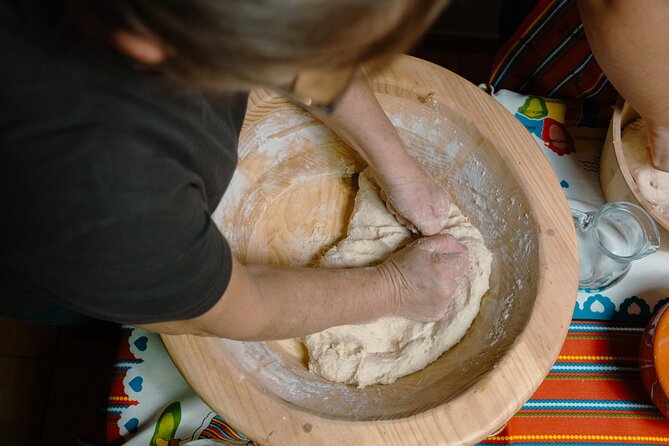
After the introduction, you roll up your sleeves and work with the dough. You knead it and shape it by hand, with guidance from an experienced family bread maker.
This is the part I would value most. You can feel whether the dough is too sticky, too dry, or ready to shape in a way that no photograph can explain. The family setting also means you can ask for help at the exact moment you need it.
The activity should suit curious cooks of all levels. You do not need to arrive as an expert baker. The description makes clear that the process is taught during the visit, and the small group should allow the host to give attention to each person.
It is still worth setting your expectations properly. You are making one traditional bread during a three-hour cultural food visit, not taking a full professional baking course. The goal is to understand and enjoy Bolo do Caco, not master every part of bread production in one afternoon.
Children can join, and babies are welcome. There is space for children to play without disrupting the activity, which makes this a more workable choice for families than many small cooking classes. You will still need to keep an eye on young children around hot surfaces and active food preparation.
A different sort of day on the same island:
- From Funchal: Ecological Catamaran Dolphin Whale Watching
★ 4.5 · 5,771 reviews - Madeira: Skywalk, Porto Moniz, Seixal, and Fanal 4WD Tour
★ 4.9 · 5,732 reviews - Funchal: Dolphin and Whale Watching Catamaran Cruise
★ 4.5 · 5,697 reviews - Funchal: Enchanted Terraces, Porto do Moniz & Fanal 4WD Tour
★ 4.8 · 4,930 reviews
Watching the Bread Cook on Hot Stone
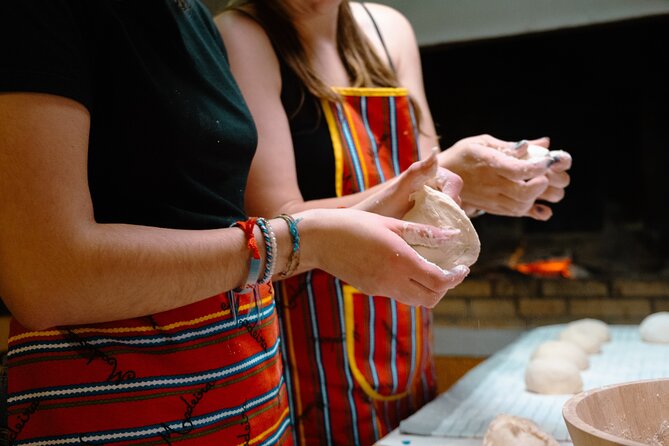
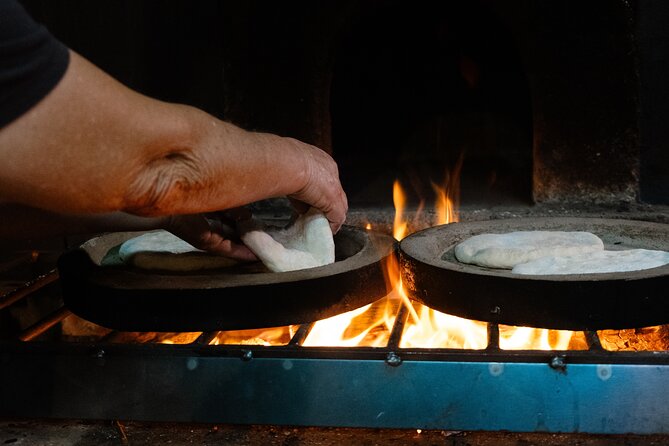
The shaped bread cooks on a hot stone. That simple step gives the class a strong sense of place and tradition.
Cooking on stone also turns the lesson into something you can watch closely. The bread changes from soft dough to a warm loaf while you are still gathered around the kitchen. You get to see the final stage rather than receiving bread that was made hours earlier.
The smell is part of the experience. Fresh bread cooking in a family kitchen creates the kind of welcome no restaurant menu can reproduce. Stories and laughter fill the waiting time, and the three-hour schedule leaves space for that social side of the meal.
You should not read the hot-stone method as a promise of a rustic performance with every detail fixed in front of you. The supplied information does not specify the exact cooking equipment, recipe measurements, or how many loaves each person makes. What you can count on is that the bread is shaped by hand and cooked as part of the visit.
For that reason, the class works best if you value learning by doing. If your main aim is simply to sample Madeira’s bread, you could find it easier to order Bolo do Caco elsewhere. Here, the point is the connection between preparation, family knowledge, and eating.
Sitting Down With Garlic Butter, Cheese, and Chouriço
Once the bread is ready, everyone gathers around the table. The warm Bolo do Caco is served with garlic butter, Portuguese cheese, and chouriço.
This final meal gives the class a satisfying finish. You get to taste the bread in the way it is meant to be enjoyed, with savory additions that show how a basic loaf can become a full snack or light meal.
Garlic butter is an especially natural partner for warm bread, while cheese and chouriço add more substance. The combination also gives you several ways to taste the bread: buttery, salty, smoky, and plain.
I like that the food is shared at a table rather than handed over in a takeaway box. The meal creates time for more conversation with the family and lets you enjoy the mountain setting without hurrying to the next stop.
The information does not state that the menu can be changed for allergies, vegetarian diets, or other restrictions. If you have dietary needs, contact the hosts before booking and ask what alternatives are possible. Do not assume that the listed cheese, garlic butter, and chouriço can be replaced.
Why the Family Home Matters
A family home brings warmth, but it also calls for good manners and realistic expectations. You are entering someone’s personal space, so the visit may feel more relaxed and less standardized than a commercial class.
That is a benefit if you want direct contact with local food traditions. Tonia and her family can share the bread in a personal way, and the setting encourages the kind of small talk that often becomes the best part of a food activity.
The family welcome is a major strength here. The hosts are described as kind and accommodating, and the atmosphere is built around treating you as a friend rather than a customer. That does not mean the class has no structure. You still have a clear sequence: learn, knead, shape, cook, and eat.
The mountain backdrop adds to the sense of place, but the class is still primarily about bread and family hospitality. You should not book it as a sightseeing tour with a long list of viewpoints. The mountains frame the visit while the kitchen remains the main event.
Service animals are allowed. The activity is offered in English, which makes the instruction accessible to English-speaking visitors. A mobile ticket is provided, making it practical to keep the booking on your phone.
Who Will Enjoy This Class Most
I would recommend this experience to you if food is one of the main ways you connect with a place. It suits people who prefer a small gathering and a real home setting to a large group demonstration.
It is also a good match for families. Kids and babies are welcome, and the hosts provide space for children to play without disrupting the class. Parents should still expect to take part in the baking rather than treating the visit as childcare.
Couples, solo visitors, and small groups of friends can also make good use of the three-hour format. With a maximum of five people, the activity has a private-feeling quality without requiring a large party.
You may want to skip it if you dislike hands-on cooking, have strict dietary needs that have not been cleared in advance, or prefer a formal culinary lesson. The class centers on social connection and a single Madeiran specialty, not a broad survey of island cuisine.
Is the Three-Hour Format Good Value?
The price is not provided in the available details, so I cannot judge the exact cost in euros. I can still explain what you are paying for: instruction from a family bread maker, an intimate group capped at five, hands-on preparation, a cooked meal, and time in a private home.
That package can offer good value if you would otherwise spend money on both a food tasting and a cultural activity. You are not only buying a serving of bread. You are paying for the setting, the teaching, the family contact, and the chance to make part of the meal yourself.
The value is less clear if you only want a quick taste of Bolo do Caco. A bakery or restaurant would likely be a simpler choice, but this class gives you something those places cannot: the process and the personal welcome.
Free cancellation is available when you cancel at least 24 hours before the start time. Changes or cancellations inside that window are not refunded, so keep Madeira’s local time in mind when making plans.
Should You Book the Bolo do Caco Class?
Book this if you want a personal Madeira food experience with real participation. The strongest reasons are the five-person limit, the family kitchen, Tonia’s mother’s four decades of bread-making experience, and the chance to eat your work with classic local accompaniments.
I would be especially keen to choose it for a relaxed day in Madeira, when you can give the full three hours to conversation and cooking. It is not the right pick for a fast stop, a formal chef-led course, or a broad food tour.
For most food-minded visitors, the combination is hard to improve on: knead the dough, watch it cook on hot stone, then sit down with garlic butter, cheese, and chouriço while the mountains sit beyond the home. That is a small experience, but it gives you a useful and memorable taste of how food traditions live in ordinary family kitchens.
FAQ
How long does the Bolo do Caco baking class last?
The activity lasts approximately three hours.
Where does the activity begin?
It begins at Travessa do Lombo do Alho, 9360, Portugal.
Where does the activity finish?
The activity ends back at the meeting point.
Is the class offered in English?
Yes. The experience is offered in English.
How many people can join the class?
The activity has a maximum of five travelers.
Who teaches the bread-making?
The host’s mother leads the bread-making and has more than 40 years of experience making bread. Tonia is also part of the family welcome.
What food is served after baking?
The freshly cooked Bolo do Caco is served with garlic butter, Portuguese cheese, and chouriço.
Can children and babies join?
Yes. Kids and babies are welcome, and there is space for children to play without disrupting the activity.
What is the cancellation policy?
You can cancel at least 24 hours before the start time for a full refund. Cancellations or changes made less than 24 hours before the start time are not accepted or refunded.
More Workshops in Madeira
- Funchal: Madeira Island Group Surf Lesson
★ 4.7 · 282 reviews - Madeira: Surf Lessons for All Levels
★ 4.8 · 191 reviews - Surfing Lessons in Madeira
★ 5.0 · 168 reviews - Madeira Surfing Lessons – Aroundfreedom Surf School
★ 5.0 · 104 reviews
Just added around Madeira
- Madeira: Wine Safari Jeep Tour with Local Guide★ 3.9 · 6 reviews
- Visiting local Vineyard With Wine Tasting & Lunch included★ 5.0 · 6 reviews
- West Tour Porto Moniz★ 4.6 · 26 reviews
- Funchal: Maderia Island Off Road Jeep Tour with Swim Stop★ 5.0 · 11 reviews
- Tuk Tuk Monte Toboggan – Madeira Island★ 4.1 · 4 reviews
- Tuk Tuk Funchal CR7 – Madeira Island★ 4.8 · 4 reviews
- Lakes of Madeira- Alecrim Full day walk★ 4.0 · 9 reviews
- Full Day Open Roof 4×4 Unforgettable Northwest of Madeira★ 5.0 · 22 reviews
Workshops, compared.
Madeira Surfing Lessons – Aroundfreedom Surf School
Read our review →


Browse the lists this tour appears in