
Reviewed · CITY TOURS
Ribeira Brava: The barn of the first atlantic city – Private Tour
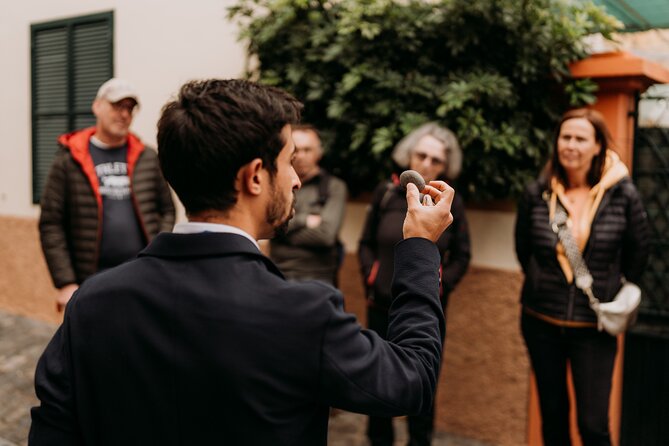
Ribeira Brava’s old center becomes an open-air lesson in how Madeira was made. In about two and a half hours, you’ll look at volcanic rock, river deposits, flood damage, sugar production, old buildings, and paving styles while your guide connects the pieces. It is a small-town tour with a wider view of the island.
I like the geology made visible. You are not simply told that Madeira is volcanic. You examine subaerial lava flows and Quaternary alluvial deposits in the town itself. I also like the way the walk links geology to daily life, from sugar mills and flood control to the placement of streets and buildings.
The main consideration is its narrow focus and fixed schedule. This is a Saturday morning activity, from 10:00 AM to 12:30 PM, and it requires good weather. If you want a scenic drive, major viewpoints, or a long hike, this is not that kind of tour.
Key points at a glance
- Volcanic evidence in the town: See lava flows and alluvial deposits rather than learning about Madeira’s geology only from a lecture.
- A private experience: Only your own group takes part, which allows room for questions and discussion.
- A close look at Ribeira Brava: Study the village plan, historic buildings, church details, paving, and former industrial sites.
- A guide-led history of settlement: The walk connects the Portuguese arrival with sugar cane, architecture, and the growth of Madeira.
- Practical local context: Guides Sandro and Santosh are praised for clear explanations and useful tips about restaurants and hotels.
- Simple inclusions: Bottled water, coffee or tea, and alcoholic beverages are included, while transport to Ribeira Brava is not.
Starting at São Bento Fort in Ribeira Brava
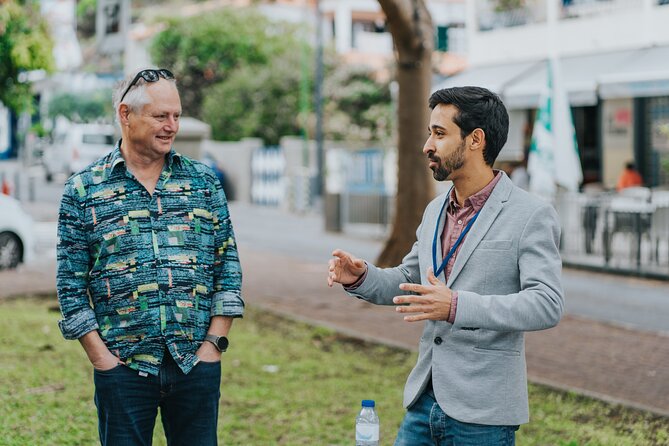
The tour begins at Fort of São Bento, on Rua Gago Coutinho e Sacadura Cabral. This gives you a clear meeting point in the town center, but you must arrange your own way there because private transportation is not included.
The activity lasts about two hours and thirty minutes, ending back at the same meeting point. That makes it easy to pair with other plans in Ribeira Brava, though the Saturday-only schedule limits your options. At present, the stated operating period runs through June 6, 2026, with the tour offered on Saturdays from 10:00 AM to 12:30 PM.
Because this is a private tour, your group sets the pace within the planned walk. That matters here. The subject is not just a list of dates and places. You may want to stop and ask why a building was constructed in a certain way, how floodwaters moved through the valley, or how sugar changed the island economy.
The meeting point is also useful for first-time visitors who want an introduction to Ribeira Brava without committing to a full-day outing. You start in the town, stay in the town, and finish where you began.
A few more Madeira days out worth comparing
- Madeira: Private Funchal City Tour in a Tukxi
★ 4.7 · 684 reviews - Private Dolphin and Whale Watching Tour in Madeira
★ 5.0 · 539 reviews - West Side Private Full Day Tours around Madeira Island
★ 5.0 · 274 reviews
Madeira’s volcanic beginnings, explained on the street
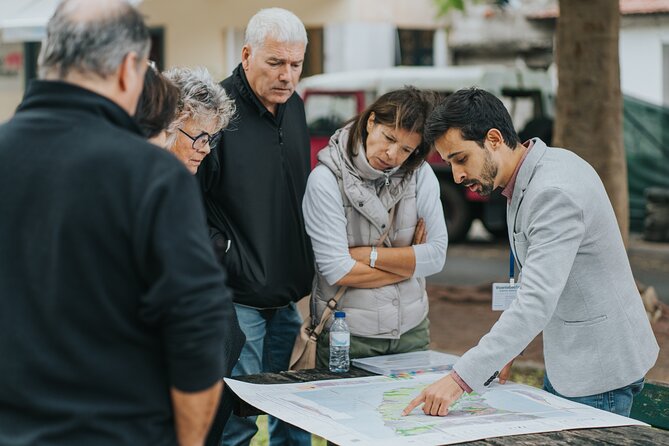
The first part places Ribeira Brava within the geological story of Madeira and the wider archipelago. You begin with the formation of Earth, then move toward the volcanic processes that shaped Madeira.
That may sound broad for a walking tour, but the value comes from tying the big picture to things in front of you. Instead of treating geology as a museum subject, the guide uses the valley and buildings as teaching tools. The town becomes a place to observe rock, water, slopes, construction, and human settlement at once.
The tour includes a look at subaerial lava flows, meaning lava that reached the surface and cooled in open air. You also examine Quaternary alluvial deposits, material laid down by flowing water over a much more recent period than the volcanic rock.
For you, the useful point is the contrast. Lava tells one part of Madeira’s story. Alluvial deposits tell another, showing how water has carried and placed sediment in the valley. Together, they help explain why Ribeira Brava developed where it did and why water has always mattered here.
The guide’s strength is important in this section. Sandro is described as giving detailed explanations in clear English, while Santosh is praised for making complex subjects understandable and engaging. The names attached to the experience vary in the available information, so the exact guide may depend on the date of your booking.
Understanding Ribeira Brava’s flash floods
Madeira is not just a place of dramatic mountains and ocean views. Rainwater can move quickly through steep valleys, and Ribeira Brava’s history includes serious flash floods. The tour explains these events and uses the village to discuss how water shaped the settlement.
This is one of the most practical parts of the walk because it changes how you read the town. A street, wall, bridge, or building placement can look ordinary until you understand the force of water moving through a narrow valley.
You should not expect a disaster simulation or a technical engineering lecture. The experience is an outdoor interpretation of the town, with the guide explaining the relationship between natural forces and human planning. The result is a better sense of why Madeira’s villages cannot be understood apart from their valleys and waterways.
I find this connection especially useful if you plan to drive around the island later. You begin to notice how roads, homes, and cultivated areas occupy limited flat ground. The tour gives you a framework for reading the island beyond its postcard views.
Reading the village plan and old buildings
Ribeira Brava’s Historical Center supplies much of the evidence for the next part of the walk. You look at the spatial planning of the village and consider how the valley, river, buildings, and public spaces fit together.
This is not a tour that rushes from one famous monument to the next. Its appeal is in details you could easily pass without explanation. One example is the manor house of Captain Luis Gonçalves Silva, where the guide discusses engineering features and construction choices.
The house gives the tour a human scale. Geological forces and settlement patterns can feel abstract, but a specific manor links those themes to a person, a period, and a building. You see how local conditions influenced construction and how an important home fitted into the town.
The walk also includes religious and cultural elements. One account of the experience notes that a religious ceremony and local culture were included alongside geology, history, and architecture. That suggests the tour is not limited to stones and dates. It pays attention to the role of buildings and traditions in community life.
You may find this part most rewarding if you enjoy old-town walks but want more than architectural labels. It is less suitable if you prefer to explore independently and photograph without stopping for explanation.
A different sort of day on the same island:
- From Funchal: Ecological Catamaran Dolphin Whale Watching
★ 4.5 · 5,771 reviews - Madeira: Skywalk, Porto Moniz, Seixal, and Fanal 4WD Tour
★ 4.9 · 5,732 reviews - Funchal: Dolphin and Whale Watching Catamaran Cruise
★ 4.5 · 5,697 reviews - Funchal: Enchanted Terraces, Porto do Moniz & Fanal 4WD Tour
★ 4.8 · 4,930 reviews
A global heritage stone and the story beneath your feet
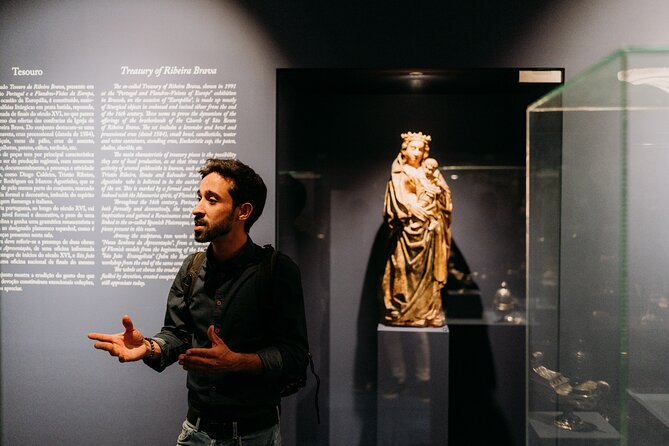
One stop concerns one of the Portuguese Global Heritage Stones. This is a small detail with a big purpose. It shows that the rocks around Madeira are not merely construction material or scenery. They also help explain geological processes and the story of the Portuguese-speaking world.
The experience uses physical objects well. A stone in a wall, a deposit beside a path, or a paving pattern can become evidence. That approach gives the walk a detective-like quality without making it childish or theatrical.
Paving receives its own attention. You observe both Portuguese-style pavement and Madeiran-style pavement as applied in the town. The distinction is worth noting because paving is often treated as background decoration. Here it becomes part of local identity and a record of how building methods adapt to place.
Look down as you walk. The paving may not be the headline attraction, but it is one of the details that helps you notice the town more closely. You will likely come away with a better eye for patterns, stone use, and the difference between a general Portuguese tradition and its Madeiran application.
Sugar cane, mills, and Madeira’s changing economy
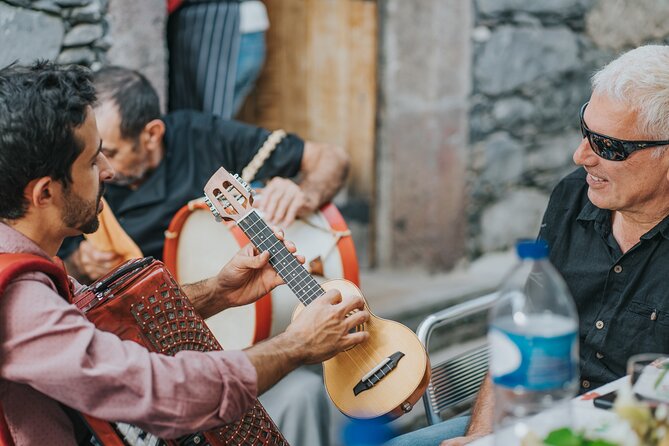
Sugar cane mills provide the clearest link between physical geography and social history. Madeira’s climate, slopes, water, and labor shaped the growth of sugar production, and the mills reflect the economic changes that followed.
The guide explains the relationship between the mills and Madeira’s socio-economic development. That wording matters because the subject is not just how sugar was processed. It is how an industry affected work, wealth, buildings, trade, and the growth of settlements such as Ribeira Brava.
You may see places connected with former industrial activity, including an old power plant in the middle of town. This is exactly the sort of detail that benefits from a guide. Without context, an old industrial building can look like an obstacle or an unused shell. With explanation, it becomes part of the town’s economic and technical story.
The tour does not promise an operating sugar mill or a tasting session, so keep expectations realistic. Its focus is interpretation. You are learning how sugar production fits into Madeira’s past, not signing up for a factory visit.
A guide who encourages questions
The human element is central to this experience. The guide is expected to lead a private group, explain specialist subjects in plain English, and respond to questions that arise during the walk.
Sandro is specifically praised for detailed knowledge of Madeira, practical suggestions about restaurants and hotels, and a friendly manner. Santosh is also named in connection with the tour and is described as an expert in Madeira and Ribeira Brava who explains history clearly. Since both names appear in the supplied information, confirm who will lead your date if that matters to you.
The strongest pattern is the guide’s range. The walk covers geology, local history, architecture, religious culture, floods, sugar, and paving. That is a lot for one morning, so a guide who can move between subjects without losing the thread is essential.
I would book this early in your Madeira stay if you want a better base for the rest of your visit. The tour can give you a way to interpret places you see later, especially valleys, old buildings, cultivated slopes, and engineering works. It is also suited to repeat visitors, since the subject matter goes beyond the usual first-look sights.
What the $40.33 price includes
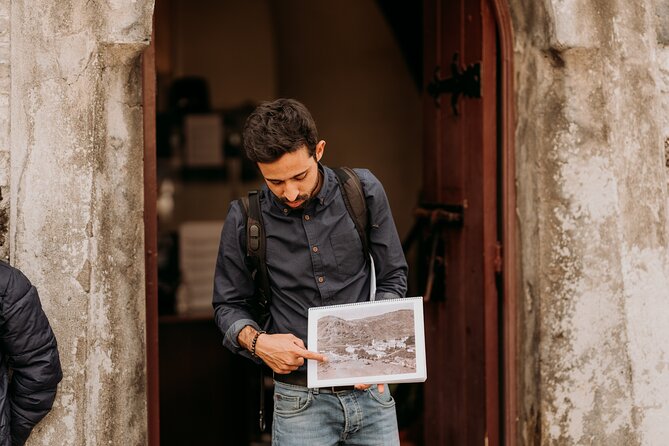
At about $40.33 per person, the value depends on your group size and interests. You are paying for a private two-and-a-half-hour walk with a local guide, rather than shared transportation or a full-day island circuit.
For someone who wants a focused introduction to Ribeira Brava, the price is reasonable. The guide’s time is devoted to your group, and the content reaches beyond a standard town stroll. You also receive bottled water, coffee or tea, and alcoholic beverages.
The included drinks are a pleasant extra, but they should not be the reason you book. The real value is the interpretation of things you might otherwise walk past, such as the old power plant, paving styles, geological deposits, or the manor house.
Group discounts may improve the per-person cost for larger parties. Since transportation is not included, add the cost and effort of reaching Ribeira Brava yourself. If you are already staying nearby or have your own transport, the value is stronger.
Who should book this private walk
I would recommend it to you if you enjoy:
- Small-town history with a strong local focus
- Geology explained through real sites
- Architecture and engineering details
- Cultural context rather than a quick photo stop
- Private tours where you can ask questions
- An activity that lasts one morning rather than a full day
It should suit most participants, and service animals are allowed. The meeting point is near public transportation, though the tour does not provide private transfers.
Families and mixed-interest groups may also find it useful because the subject changes often. One moment concerns volcanic rock, the next a manor house, a flood, a mill, or a paving method. Still, anyone who needs a very gentle, fully seated activity should ask for details before booking, since the format is a walking tour.
You should skip it if your priority is a major scenic excursion, a levada walk, swimming, or a broad island overview by vehicle. Ribeira Brava is the subject, and the pleasure comes from looking closely rather than covering a lot of ground.
Timing, weather, and cancellation
The tour runs on Saturday morning only according to the stated schedule. Plan to arrive at São Bento Fort before 10:00 AM, since the activity begins there and returns to the same point at 12:30 PM.
Good weather is required. If poor weather cancels the activity, you are offered another date or a full refund. You can also cancel for a full refund if you do so at least 24 hours before the start time. Cancellations or changes made inside that 24-hour window are not accepted for a refund.
The weather rule makes sense for a walking tour built around outdoor observation. Madeira’s conditions can change, so keep your plans flexible if this is important to your day.
Should you book Ribeira Brava’s geology and history walk?
Book this tour if you want to understand Madeira through one town rather than race around the island. Its best feature is the way geology, floods, settlement, sugar, architecture, and paving fit into one story.
The private format, clear English explanations, and guide’s practical local advice add real value. Just remember that it is a Saturday-only, weather-dependent walking tour with no included transport. For curious visitors who enjoy asking questions and noticing overlooked details, it is a smart way to spend a morning in Ribeira Brava.
FAQ
Where does the tour begin?
The tour begins at Fort of São Bento, at Rua Gago Coutinho e Sacadura Cabral, 9350-216 Ribeira Brava, Portugal.
Where does the tour end?
The activity ends back at the meeting point at Fort of São Bento.
How long does the tour last?
The tour lasts approximately two hours and thirty minutes.
When is the tour offered?
The stated opening schedule is Saturdays from 10:00 AM to 12:30 PM, for the operating period listed through June 6, 2026.
Is this a private tour?
Yes. Only your group participates in the activity.
Is transportation included?
No. Private transportation is not included. The meeting point is near public transportation.
What is included in the price?
The tour includes a local guide, bottled water, coffee or tea, and alcoholic beverages.
Can I cancel for a full refund?
Yes. You can receive a full refund if you cancel at least 24 hours before the experience begins. If poor weather causes the provider to cancel, you are offered another date or a full refund.
Just added around Madeira
- Madeira: Wine Safari Jeep Tour with Local Guide★ 3.9 · 6 reviews
- Visiting local Vineyard With Wine Tasting & Lunch included★ 5.0 · 6 reviews
- West Tour Porto Moniz★ 4.6 · 26 reviews
- Funchal: Maderia Island Off Road Jeep Tour with Swim Stop★ 5.0 · 11 reviews
- Tuk Tuk Monte Toboggan – Madeira Island★ 4.1 · 4 reviews
- Tuk Tuk Funchal CR7 – Madeira Island★ 4.8 · 4 reviews
- Lakes of Madeira- Alecrim Full day walk★ 4.0 · 9 reviews
- Full Day Open Roof 4×4 Unforgettable Northwest of Madeira★ 5.0 · 22 reviews
City Tours, compared.
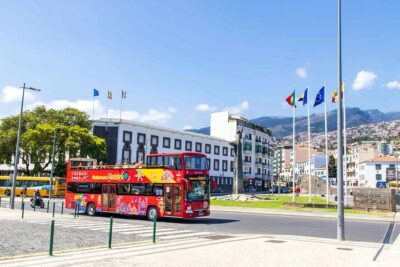
City Sightseeing Funchal Hop-On Hop-Off Bus Tour
Read our review →
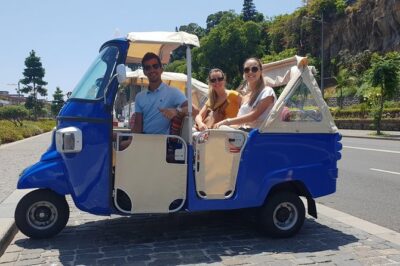
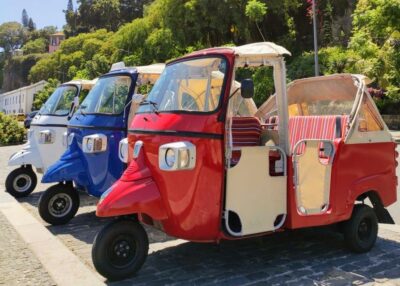
Madeira Funchal City Historical Tuk Tuk Guided Tour by MadTuk
Read our review →Browse the lists this tour appears in