
Reviewed · MADEIRA
Madeira Island: Southwest Tour
Madeira’s southwest is a fine place to see the island’s changing character in one day: sunny seaside towns, steep Atlantic cliffs, old fishing villages, sugar cane, bananas, and a lighthouse at the far western edge. I especially like the Ponta do Pargo lighthouse, built in 1922, and the small-scale feel of the Prazeres Educational Farm, where herbs and animals replace the usual sightseeing checklist.
I also like that the route includes quiet coastal villages such as Paúl do Mar and Jardim do Mar, not only headline attractions. The main drawback is that some stops are brief and quiet, so you may find little to do beyond taking photos and enjoying the view. Weather also matters greatly on this coast.
Key points to know before booking
- Ponta do Pargo Lighthouse: See one of Madeira’s best-preserved coastal lighthouses, dating from 1922.
- Prazeres Educational Farm: Visit animals and aromatic herb gardens in a more local, hands-on setting.
- Madalena do Mar: Finish in Madeira’s largest banana-producing area, beside sea cliffs and the Atlantic.
- Paúl do Mar and Jardim do Mar: Explore traditional pebble-beach villages known for calm scenery and surfing.
- Eight-hour south coast route: Pickup, drop-off, and a live multilingual guide are included in the $49 price.
- Flexible booking: You can cancel up to 24 hours before departure for a full refund and reserve without paying immediately.
Why Madeira’s southwest works well as a full-day tour
This is not a single-attraction outing. It is a broad look at Madeira’s southern and southwestern coast, with stops that show how people live, farm, fish, and travel around the island.
I like the route because it mixes scenic viewpoints with places that have a practical connection to Madeira. You see a sugar cane factory in Calheta, herbs and farm animals in Prazeres, fishing villages at Paúl do Mar and Madalena do Mar, and banana-growing country at the end. That gives the day more substance than a drive from one lookout to another.
The tour lasts about eight hours, so you should expect a full day on the road. The itinerary has several stops, but not every village offers a long visit or many attractions. One German-language assessment described the outing as relaxed, with well-kept timing and several highlights. That is a useful clue for setting expectations: this is a scenic overview, not a series of lengthy guided visits.
The guide can speak Portuguese, English, French, German, or Spanish. One guide named Eduardo was praised for his passion for Madeira and for allowing the group to agree on how long to spend at some stops. That flexible approach can be useful when weather, views, and group interest change during the day.
Other Madeira days people book alongside this one:
- From Funchal: Ecological Catamaran Dolphin Whale Watching
★ 4.5 · 5,771 reviews - Madeira: Skywalk, Porto Moniz, Seixal, and Fanal 4WD Tour
★ 4.9 · 5,732 reviews - Funchal: Dolphin and Whale Watching Catamaran Cruise
★ 4.5 · 5,697 reviews
Ponta do Sol begins the day in Madeira’s sunny corner
The first stop is Ponta do Sol, described as the sunniest part of Madeira. The town gives you an early look at the island’s southern coast, where the sea and steep slopes meet in a compact settlement.
I like beginning here because it sets the tone for the rest of the route. You are not starting with a large museum or a crowded city center. Instead, you get a coastal town, open views, and a quick sense of how Madeira’s bright southern side differs from wetter parts of the island.
The exact amount of free time is not provided, so plan to enjoy the town at the pace set by the group and guide. This is one reason comfortable shoes and a simple day bag are useful, though the tour information does not specify a required dress code or walking distance.
Moledos gives you the view over Madalena do Mar
At Moledos, the focus shifts from the immediate shoreline to a view over Madalena do Mar, an old fishing village. From above, you can take in the village, the sea cliffs, and the way settlement and agriculture fit into the narrow coastal strip.
This viewpoint is especially helpful because you see Madalena do Mar before reaching it later in the day. The stop gives you a larger view of the area, while the final visit lets you experience the village more directly.
Do not expect a long historical tour here. The information supplied for the stop centers on the view, so I would treat Moledos as a photo and orientation stop rather than a major attraction. If the weather is cloudy, this part of the route may have less impact. One past assessment specifically noted that poor weather reduced the value of the outing, a fair warning for any Madeira tour built around coastal views.
Calheta combines sand, sugar cane, and a working-island feel
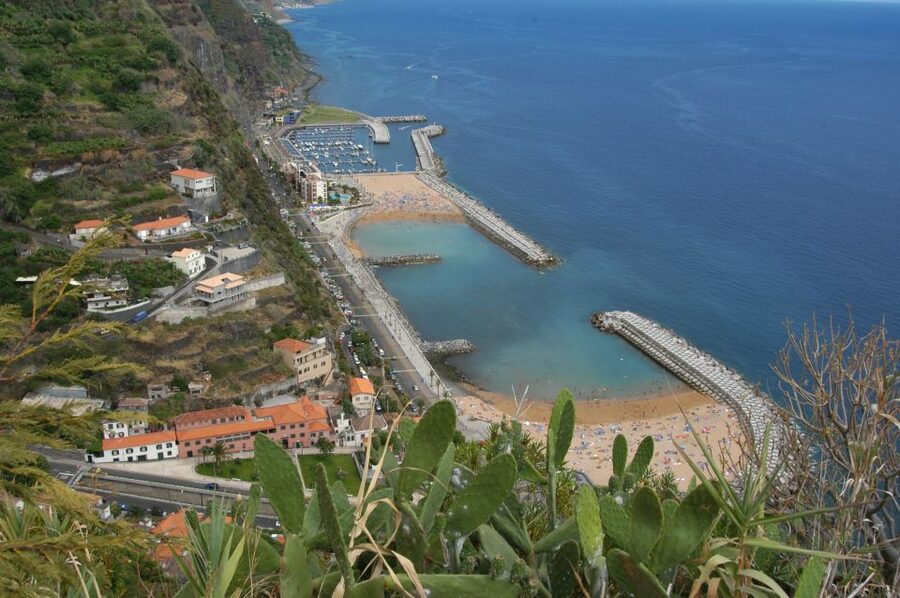
Calheta adds two unusual details to the day: an artificial sand beach and a sugar cane factory. The beach gives you a different coastal setting from Madeira’s usual rocky and pebble shorelines, while the factory points to one of the island’s long-standing agricultural products.
I like this pairing because it shows both recreation and work. Madeira is not just dramatic cliffs and pretty villages. Sugar cane remains part of the island’s identity, and Calheta helps connect the scenery to local production.
The stop may appeal to you if you want variety. It is less useful if you are looking for a long beach stay, since the tour continues through several other places. Think of Calheta as a compact stop within a larger route, not a beach day.
A different sort of day on the same island:
- Funchal: Enchanted Terraces, Porto do Moniz & Fanal 4WD Tour
★ 4.8 · 4,930 reviews - Porto Moniz, Seixal, Fanal Forest, Cliff Skywalk in Open Roof 4X4
★ 5.0 · 3,631 reviews - From Funchal: Best of Madeira’s West Tour
★ 4.7 · 3,463 reviews - Madeira: Best of the East Tour from Funchal
★ 4.7 · 3,364 reviews
Prazeres Farm brings the most local touch
Prazeres Educational Farm, also called Quinta Pedagogica dos Prazeres, is one of the more distinctive stops. The farm houses various animals and grows aromatic herbs, giving you a chance to see a modest agricultural project rather than another overlook.
This is the part I would single out for families and anyone who wants a break from constant coastal scenery. Children may find the animals more engaging than a viewpoint, while adults can pay attention to the herbs and the farm’s educational purpose.
The farm also gives the guide something concrete to explain. Madeira’s climate supports a range of crops, and aromatic plants are a pleasant way to connect the visit with everyday island life. The supplied information does not specify which animals or herbs you will see, so I would keep expectations broad.
Allow enough flexibility for this stop. The tour includes several villages and viewpoints, and the farm may be more enjoyable when you have time to look around rather than rush through it. Still, the total day has a fixed length, so the guide controls the final timing.
Ponta do Pargo Lighthouse marks the western edge
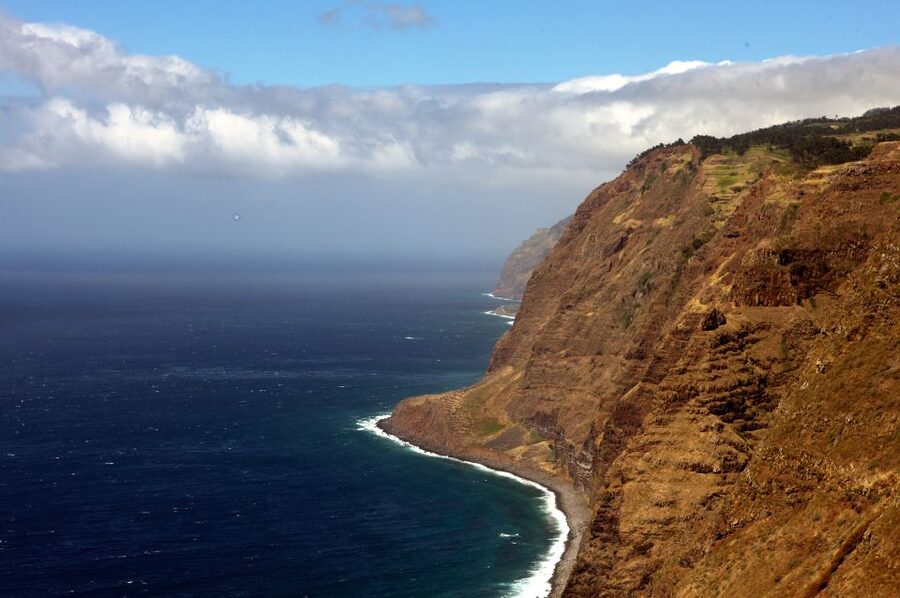
Ponta do Pargo is one of the strongest stops on the route. Its lighthouse was built in 1922 and is described as exceptionally well preserved. With Madeira’s cliffs and the Atlantic behind it, the setting gives you the kind of clear visual landmark that stays in your memory after a busy day.
I like this stop for two reasons. First, the lighthouse has a specific date and purpose, making it more meaningful than an unnamed lookout. Second, it sits in a part of Madeira known for broad coastal views, so you get both a human-made landmark and a dramatic natural setting.
The lighthouse is likely to be the high point for anyone who prefers scenery and strong photo opportunities. One German assessment called the western point, the views, and the steep cliffs the most interesting part of the outing. That matches the route itself: Ponta do Pargo is where the day feels most remote and open.
Weather can change the experience. In mist or heavy cloud, the lighthouse remains worth seeing, but the Atlantic and cliffs will not have the same effect. The guide may also adjust the amount of time spent there if conditions are poor.
Paúl do Mar shows Madeira’s fishing and surfing side
Paúl do Mar is a traditional fishing village and a known surfing spot. This makes it different from the more polished or purpose-built parts of the coast. You are seeing a place shaped by the sea, with a stronger connection to fishing and outdoor water activities.
From the viewpoint above the village, you can look over the mountains and Atlantic. The height gives you a useful contrast with the earlier coastal stops. Instead of standing at the water’s edge, you see how the village fits beneath the slopes.
Paúl do Mar is also a good reminder that a traditional village may be quiet. One assessment noted that some fishing villages had little happening beyond taking a photo. I would not book this tour expecting shops, entertainment, or a long list of activities in every stop. Book it for the setting, the village character, and the chance to see several parts of the coast in one day.
If you surf, the village’s reputation adds interest, but this tour is not presented as a surfing excursion. There is no stated time for entering the water, and the itinerary continues onward.
Jardim do Mar is quiet, pretty, and made for a pause
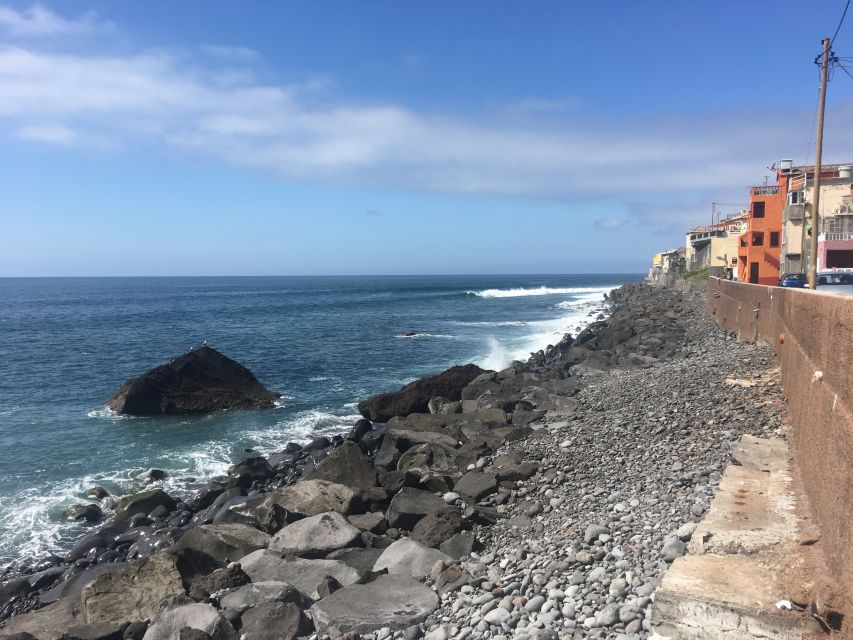
The route continues to Jardim do Mar, one of three pebble-beach villages along this part of the coast. The other two are Portinho and Enseada. These beaches attract people who want a calm natural setting, and the village is presented as one of the prettiest places on the route.
I like Jardim do Mar as a slower stop. After the lighthouse and the high viewpoint at Paúl do Mar, a pebble shore and quiet village offer a change of pace. You can focus on the sound of the sea, the coastal setting, and the small scale of the place.
Do not confuse a pebble beach with a sandy swimming beach. The supplied description emphasizes natural calm and beauty, not swimming facilities or a long beach stay. If you want a classic resort beach, Calheta is the more relevant stop because it has artificial sand.
The quietness can be either a strength or a weakness. I find it appealing if you enjoy simple coastal places and photography. You may find it underwhelming if you need shops, museums, or scheduled activities at every stop.
Madalena do Mar ends the route among cliffs and banana fields
The final stop is Madalena do Mar, a tiny fishing village overlooking the sea cliffs of Madeira’s southeastern coast. Its climate and location make it the island’s largest banana-producing area.
This is a fitting ending because it brings together several themes from the day: fishing, steep coastal terrain, agriculture, and Madeira’s mild southern climate. You begin by viewing the village from Moledos and finish by reaching it directly, giving the route a sense of continuity.
Bananas are not just a background crop here. They help explain why this part of the island looks and feels different from the high, rougher interior. The coastal conditions support farming, while the cliffs create the strong visual character you see throughout the southwest.
Again, keep the village’s scale in mind. It is described as tiny, so the value comes from its location and agricultural setting rather than a long list of sights. For me, that is a good reason to end here, but it may not satisfy you if you prefer a busy final stop.
What $49 buys you in practical terms
At $49 per person, this is a good-value way to cover a wide section of Madeira. Pickup, drop-off, and a live guide are included, along with an eight-hour route through multiple coastal areas.
The value is strongest if you do not plan to rent a car or if you want someone else to handle the route. Madeira’s coast has frequent changes in elevation and many viewpoints, and a guided day lets you see more without organizing each stop yourself.
The price is less attractive if you only want one village or one lighthouse. You are paying for coverage: Ponta do Sol, Moledos, Calheta, Prazeres, Ponta do Pargo, Paúl do Mar, Jardim do Mar, and Madalena do Mar all fit into one day.
The tour has a rating of 4.4 from 12 recorded ratings, with several strong scores praising the beautiful places, clear explanations, and good timing. There is also a low score from someone who simply did not find the outing interesting, which is useful rather than alarming. It points to the central question: do you enjoy scenic villages and viewpoints, or do you need substantial activities at every stop?
Who will enjoy this route most
I would choose this tour if you want a broad first look at Madeira’s southwest. It suits you especially well if you enjoy coastal scenery, small villages, farming, photography, and a guide who can explain the island in your language.
It is also a sensible choice for visitors with limited time. In eight hours, you see far more than you would by choosing one southern town and staying there. Pickup and drop-off remove some of the planning work, and the multilingual guide helps if you are not comfortable touring independently.
Families may appreciate Prazeres Farm, while scenery-focused visitors will likely care most about Ponta do Pargo, Paúl do Mar, and the views over Madalena do Mar. The route also works for couples and solo visitors who want a shared day rather than a private itinerary.
I would hesitate if your priority is swimming, shopping, nightlife, or long visits in each village. Several places are quiet, and some stops may be best understood as short photo breaks. The tour also depends on weather, particularly at the lighthouse and coastal viewpoints.
You should bring a face mask or protective covering, as requested in the tour information. Free cancellation is available until 24 hours before departure, and you can reserve now and pay later, which helps if your Madeira plans are still shifting.
Should you book the Madeira Southwest Tour?
Book it if you want strong coastal views, a 1922 lighthouse, fishing villages, a farm visit, and banana country in one reasonably priced day. The route has enough variety to keep the eight hours moving, and the guide language choice is a real convenience.
Skip it if you want long, unhurried time in one village or a day built around swimming and beach facilities. My best advice is to book with the right expectation: this is a scenic and cultural overview, not a deep visit to every stop. For a first visit to Madeira’s southwest, $49 is a fair price for the amount of ground covered.
FAQ
How long does the Madeira Southwest Tour last?
The tour lasts eight hours.
How much does the tour cost?
The listed price is $49 per person.
Is pickup included?
Yes. Pickup and drop-off are included.
What languages can the guide speak?
The live guide can provide the tour in Portuguese, English, French, German, or Spanish.
Which lighthouse will I visit?
You will visit the lighthouse at Ponta do Pargo, built in 1922.
Does the tour visit a farm?
Yes. You will visit Prazeres Educational Farm, also known as Quinta Pedagogica dos Prazeres, which has animals and aromatic herbs.
Which villages are included?
The route includes Ponta do Sol, Paúl do Mar, Jardim do Mar, and Madalena do Mar, along with views over Madalena do Mar from Moledos.
Will I see a beach?
Yes. The tour stops in Calheta, which has an artificial sand beach, and visits pebble-beach villages including Jardim do Mar.
Is cancellation available?
Yes. You can cancel up to 24 hours in advance for a full refund.
Do I need to pay when I book?
No. The reserve-now-and-pay-later option lets you book without paying immediately.
What should I bring?
You should bring a face mask or protective covering.
Just added around Madeira
- Madeira: Wine Safari Jeep Tour with Local Guide★ 3.9 · 6 reviews
- Visiting local Vineyard With Wine Tasting & Lunch included★ 5.0 · 6 reviews
- West Tour Porto Moniz★ 4.6 · 26 reviews
- Funchal: Maderia Island Off Road Jeep Tour with Swim Stop★ 5.0 · 11 reviews
- Tuk Tuk Funchal CR7 – Madeira Island★ 4.8 · 4 reviews
- Tuk Tuk Monte Toboggan – Madeira Island★ 4.1 · 4 reviews
- Lakes of Madeira- Alecrim Full day walk★ 4.0 · 9 reviews
- Full Day Open Roof 4×4 Unforgettable Northwest of Madeira★ 5.0 · 22 reviews