
Reviewed · MADEIRA
Funchal: Ocean to Mountain Running Tour
Madeira puts its best scenery into one long, demanding outing: a run from sea level to mountain forest and back toward the shore. You cover 28 kilometers, gain about 1,000 meters, cross a levada, and run through the eastern Laurissilva forest with a certified mountain guide.
I like the small group, limited to six people, and the way the route changes constantly. I also like the practical support: hotel pickup, water, snack bars, insurance, and a guide who can help if trail conditions change. Guides identified for this experience include Dino and Dinarte, and Dino is praised for setting a steady pace.
The main catch is simple: this is not a casual sightseeing walk. The opening climb is hard, rising from sea level toward 900 meters, and the full distance requires real trail-running fitness. If you prefer a short hike or an easy jog, this is the wrong Madeira outing.
Key points to know before you book
- 28 kilometers with 1,000 meters of ascent: This is a serious mountain run, not a gentle coastal jog.
- The first climb does the hard work: The opening section rises sharply from the sea toward 900 meters before the route becomes easier.
- Three distinct settings in one run: You move from ocean paths to levadas, mountain trails, and native Laurissilva forest.
- A small group of no more than six: The guide can keep a closer eye on pace, footing, and route changes.
- Dino and Dinarte are named guides: Dino is noted for pacing the climb well and sending photos after the run.
- Transport and basic fuel are included: Pickup, drop-off, water, snack bars, and insurance make the six-hour outing easier to manage.
From Funchal to the eastern coast
Your day begins with pickup at your Funchal accommodation, usually between 8:30 and 9:30 in the morning. The drive takes you away from the city to the eastern part of Madeira, where the run begins near the coast.
A small group matters here. Six runners is enough for conversation without turning the outing into a crowd, and it gives the guide room to adjust the pace. That is especially useful on a route with a sharp difference between the first climb and the easier miles later on.
At the starting point, you warm up before setting off. You should use this time to check your shoes, tighten your daypack, and ask the guide about the day’s pace. There is no need to rush into the hardest part cold. The run quickly becomes a workout, so the warm-up is more than a formality.
The exact starting point can depend on the day’s route, but the eastern coast and Porto da Cruz feature in the described run. This part of Madeira is a good choice for a coast-to-mountain route because the land rises quickly from the ocean. You get a genuine sense of going from one part of the island to another under your own power.
Other Madeira days people book alongside this one:
- From Funchal: Ecological Catamaran Dolphin Whale Watching
★ 4.5 · 5,771 reviews - Madeira: Skywalk, Porto Moniz, Seixal, and Fanal 4WD Tour
★ 4.9 · 5,732 reviews - Funchal: Dolphin and Whale Watching Catamaran Cruise
★ 4.5 · 5,697 reviews
The opening climb from sea level to 900 meters
The first part is the test. The route climbs from sea level toward roughly 900 meters, and the steepest effort comes early. The tour description calls the first five kilometers the toughest section. A described outing placed the full hard ascent over just more than seven kilometers, so you should expect the opening climb to vary a little with the precise trail used.
This is where the guide earns the fee. A good mountain-running guide does more than point out the path. Dino is specifically praised for setting a sensible pace for a small group, allowing runners to work steadily rather than burn out in the first hour.
You should treat this climb as a controlled effort. Short walking breaks may be useful, though the tour is built around running. The important point is not to chase a pace you cannot hold. The route becomes friendlier after the climb, and saving energy for the remaining distance will make the entire day far more enjoyable.
The gain of 1,000 meters is significant. It means your legs will feel the route even if you run regularly on flat roads. Trail surfaces also ask more of your ankles and calves, particularly when the path changes angle or becomes uneven.
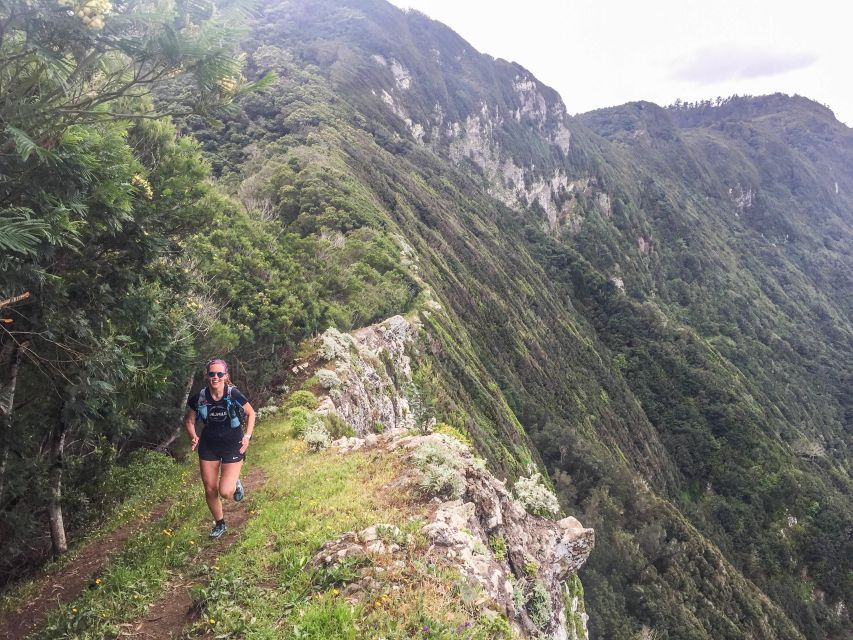
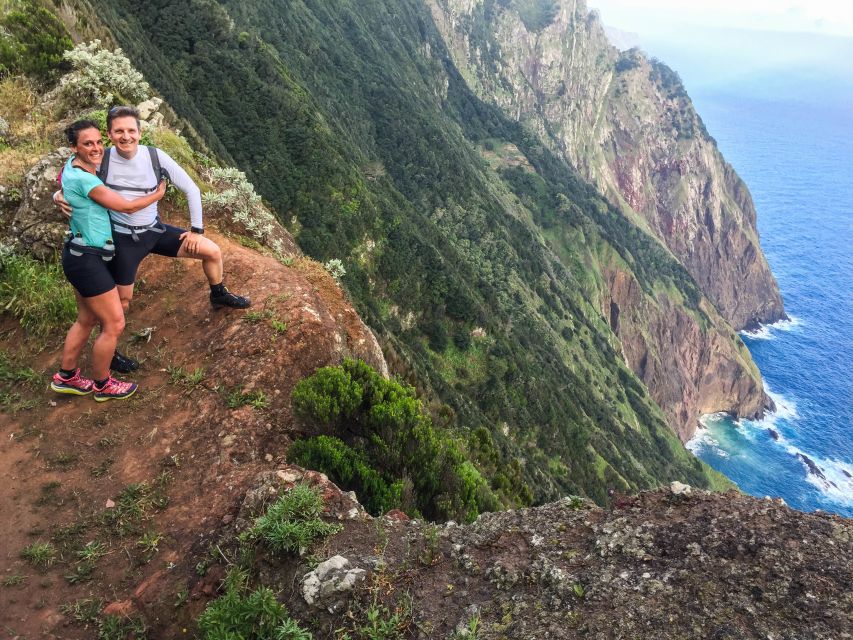
The reward comes quickly as the coast drops below you. The Larano Trail is known here for its ocean views, giving you a wide look back toward the sea as you gain height. This is not a run where the scenery waits politely for the finish. The views begin while you are still working hard.
The Larano Trail and Madeira’s changing views
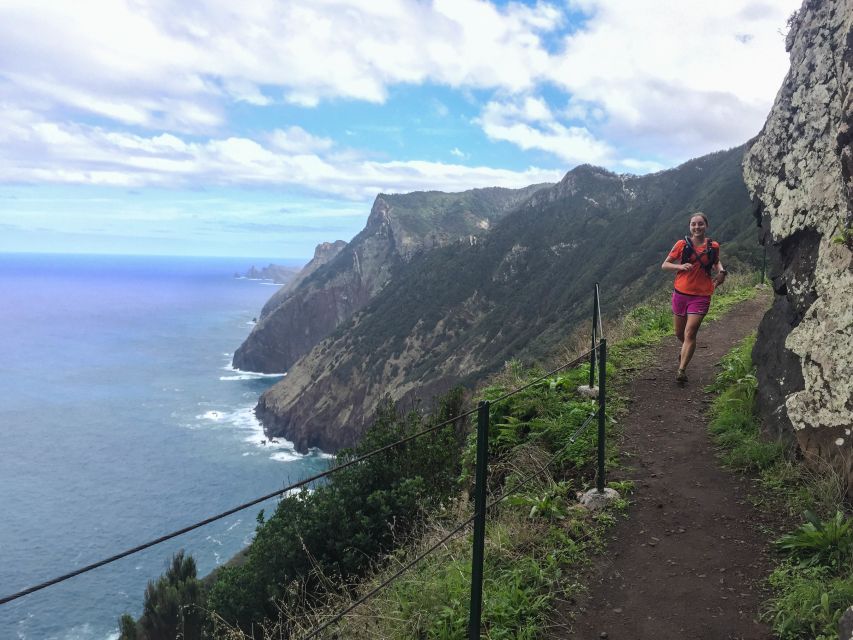
The Larano section brings the coast into focus. You run with the ocean beside or below you, then move through changing terrain as the route turns inland and higher. The constant shift is one of the best reasons to choose this experience over a standard road run.
You will not see the same kind of path for six hours. Coastal trails give way to mountain routes, and the route eventually reaches levada sections and forest. That variety keeps the day interesting, but it also means you need to stay alert. Trail running here is not simply about putting one foot in front of the other on a smooth surface.
A guide is especially useful when conditions affect the route. One section was closed because of a landslip, and the guide helped the group find the right way back onto the trail. This is a practical advantage that can be easy to miss when comparing tours. A route may be well marked in normal conditions, but a closure or damaged section can make a solo run confusing.
The guide also helps with the less obvious decisions: when to ease the pace, where to regroup, and how to keep the small group moving together. You still need to be self-sufficient, but you are not left to solve every route problem alone.
Levada paths through the Laurissilva forest
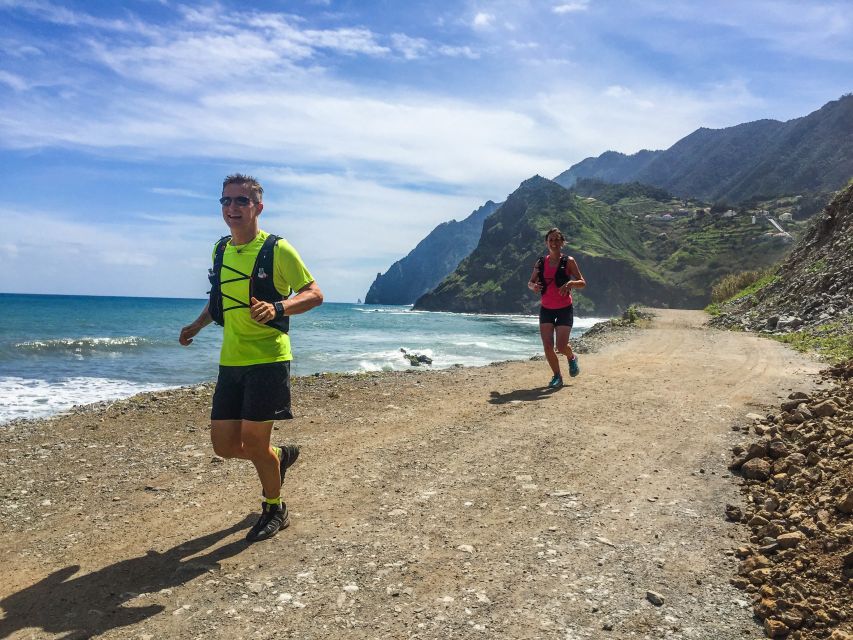
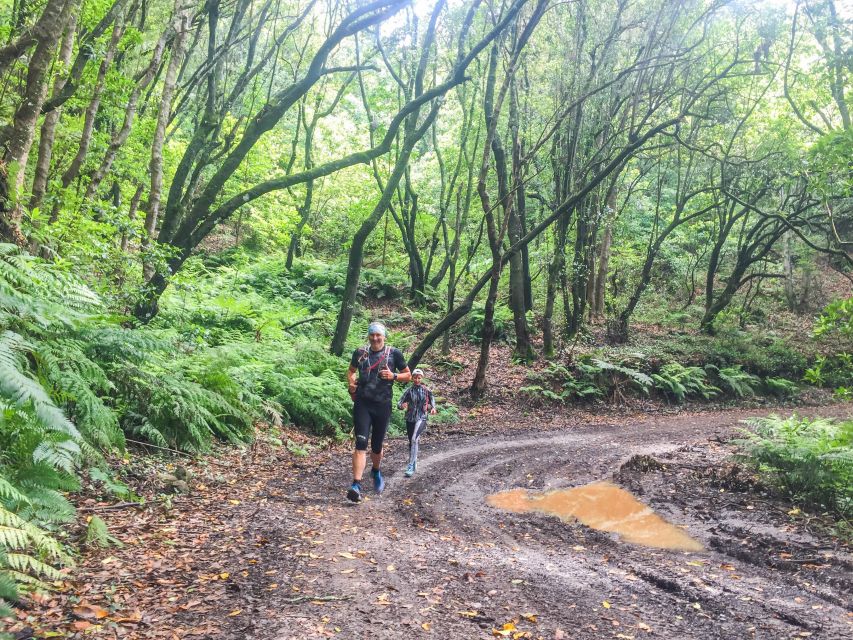
After the main climb, the character of the run changes. The route reaches easier trails, including levada sections and the eastern part of Madeira’s Laurissilva native forest.
A levada is an irrigation channel with a path beside it. These routes are one of Madeira’s defining outdoor features. Here, the levada gives you a more level running line after the steep opening, which is welcome when your legs have already done most of the climbing.
The forest section adds shade and a quieter setting. You run beneath native vegetation rather than staying exposed on the mountain. The sounds change too, with the forest replacing some of the open coastal wind and surf. It is a useful contrast to the bright ocean views at the start and finish.
The middle portion is described as easier running and gentle downhill terrain. That does not mean effortless. Twenty or more kilometers into a run, even a moderate trail can feel long. Still, the change from climbing to smoother running gives you time to settle into a rhythm.
This is also where the route feels most like a tour rather than a race. You can pay attention to the forest, levadas, and changing views instead of focusing only on the next steep section. If you enjoy moving through several types of scenery in one day, this middle stretch is likely to be the most satisfying part.
A different sort of day on the same island:
- Funchal: Enchanted Terraces, Porto do Moniz & Fanal 4WD Tour
★ 4.8 · 4,930 reviews - Porto Moniz, Seixal, Fanal Forest, Cliff Skywalk in Open Roof 4X4
★ 5.0 · 3,631 reviews - From Funchal: Best of Madeira’s West Tour
★ 4.7 · 3,463 reviews - Madeira: Best of the East Tour from Funchal
★ 4.7 · 3,364 reviews
The final shore trail and ocean finish
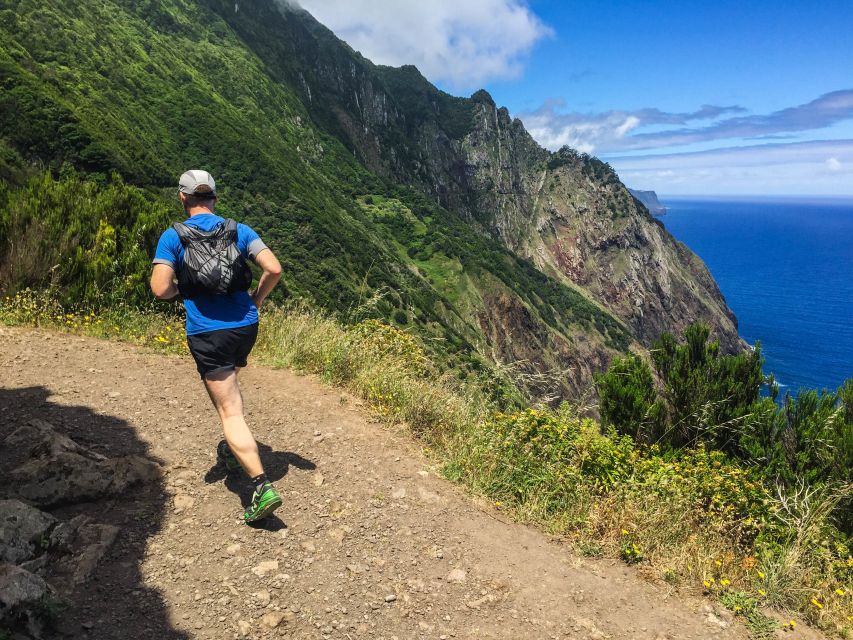
The run eventually returns toward the shore. The final part follows a beautiful coastal trail, with the sound of the ocean beside you and open views across the water.
Finishing at the coast is a smart choice for a route that begins with such a hard climb. You do not end with another major ascent. Instead, the trail settles into a smoother closing section, letting you finish without facing one last mountain test.
That final stretch also brings the day full circle. You begin near the sea, climb into the mountains and forest, then return to the coast. The route tells a clear geographical story, and you experience it through effort rather than from a vehicle window.
You should not expect a long beach stop or a meal at the finish. The included refreshments are snack bars and water, while food and other drinks are not included. Pack enough additional food for your own needs, especially if you know that six hours of running requires more than a few small snacks.
What the $80 price covers
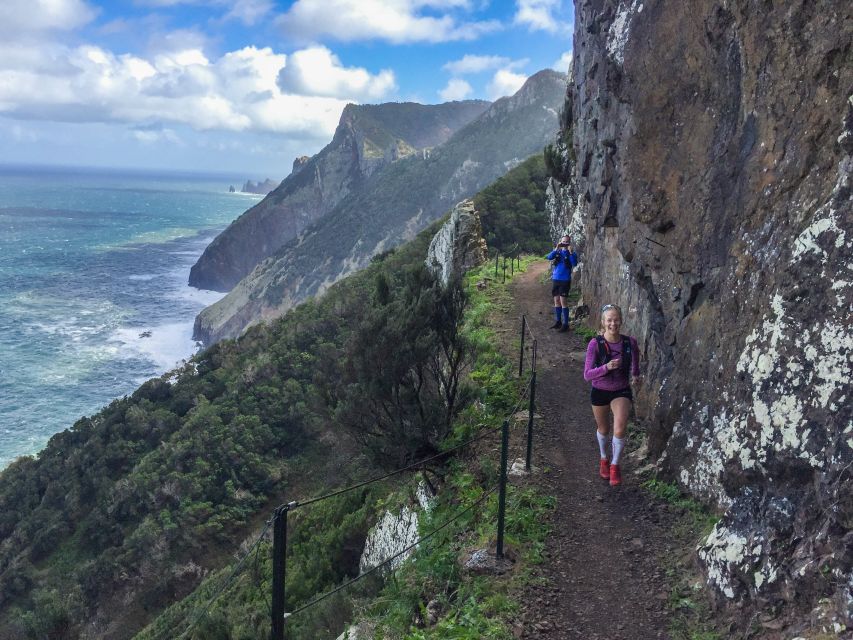
At $80 per person, this is best judged as a supported mountain-running day rather than a simple guided walk. The price includes transport from and back to your Funchal accommodation, a certified mountain running guide, a water bottle, snack bars, and liability and personal accidents insurance.
The transport adds real value. Madeira’s trailheads are spread around the island, and arranging a one-way route between the coast, mountains, and finish can be awkward without a vehicle. Pickup also means you can focus on the run instead of navigating before breakfast.
The small group is another strong part of the package. With no more than six participants, the guide can pay attention to pace and route decisions. That is more useful here than it would be on a flat city tour because the group must handle a steep climb and a long distance.
You are still paying for a specialist activity, not a full catering package. Food and drinks beyond the supplied water and snack bars are your responsibility. Bring extra fuel if you normally eat regularly during long runs.
The included insurance is reassuring, but it does not replace sensible preparation. Comfortable closed shoes, sunscreen, a jacket, and a daypack are required items. Weather can change between coast and mountain, so the jacket is worth carrying even if Funchal feels warm at pickup.
Who will get the most from this run
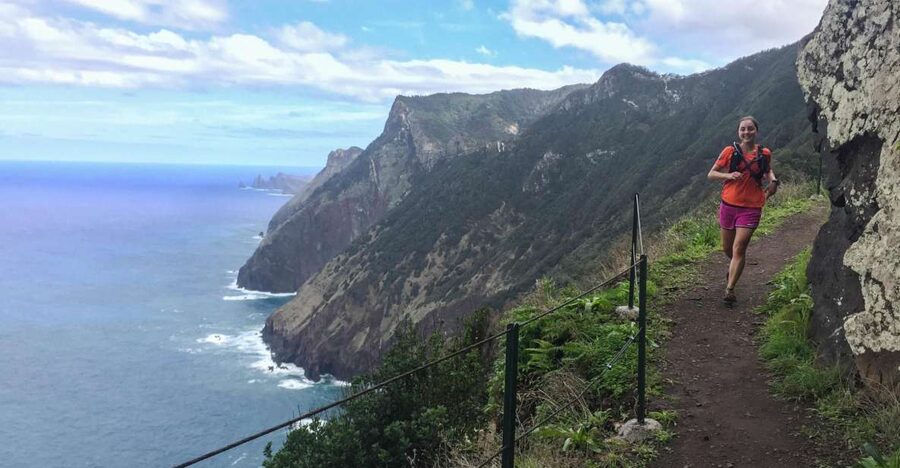
This outing suits an experienced trail runner who wants to see Madeira at running pace. You should be comfortable with long distances, steep climbing, uneven ground, and several hours outdoors. Road-running ability helps, but trail experience matters because the surface and elevation change are central to the day.
It also suits runners who prefer a structured challenge. You do not need to plan the route, arrange transport, or figure out how a trail closure affects your return. The guide handles the route while you concentrate on pacing and footing.
You should think twice if you are new to running, dislike steep climbs, or want plenty of time for stops and photographs. The route is designed as a continuous running experience. The views are a major part of it, but the main activity remains running 28 kilometers.
The tour is not suitable for wheelchair users, and open-toed shoes are not allowed. Comfortable trail shoes or sturdy running shoes are the sensible choice. Sunscreen is also important, since parts of the route are exposed even though the forest offers shade later.
The guide makes a practical difference
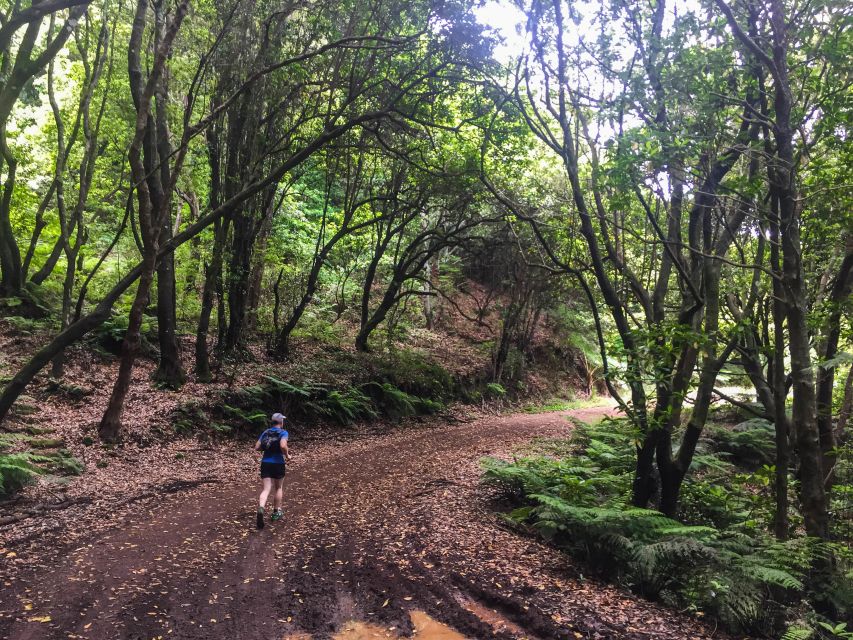
The guide is not just there to lead from the front. On a route this long, pacing can decide whether the day feels rewarding or punishing. Dino is praised for managing the small group well during the climb, then allowing the runners to enjoy the flatter and downhill sections.
The guide’s local route knowledge is just as important. A trail can be clearly marked and still become difficult to follow after a landslip or closure. Having someone who knows how to rejoin the route reduces wasted time and removes a layer of worry.
Photos may also be sent after the run. That is a nice extra, especially when you do not want to stop constantly to take pictures yourself. It is not the main reason to book, but it gives you a record of the coast, forest, and mountain day.
Guiding is available in English, Spanish, and Portuguese. You can check your preferred language when booking. The small group format should also make it easier to communicate about pace and any concerns during the run.
Timing, preparation, and booking details
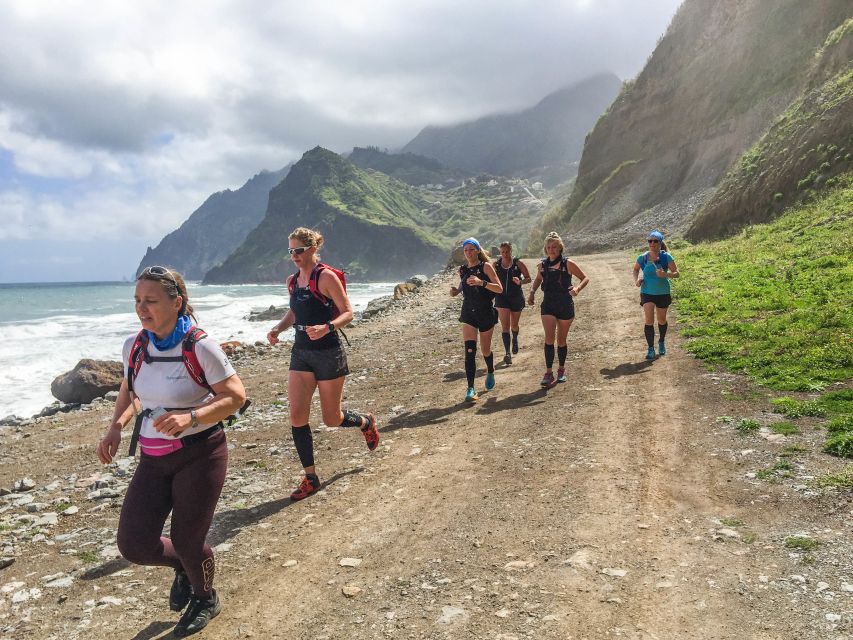
The activity lasts about six hours, with starting times set by availability. Pickup from Funchal accommodation takes place between 8:30 and 9:30 in the morning, so plan for a substantial morning and afternoon commitment.
Eat before pickup, then carry whatever additional food you need. The supplied snack bars and water bottle provide basic support, but the tour does not include meals or drinks beyond those items.
Wear comfortable shoes with good grip, apply sunscreen before leaving, and pack a jacket and daypack. Do not bring pets, and do not arrive in open-toed shoes.
You can cancel up to 24 hours ahead for a full refund. The reserve-now, pay-later option lets you hold a place without paying on the day of booking, which is useful when your Madeira schedule is still taking shape.
Should you book the Ocean to Mountain Running Tour?
Book it if you want a demanding but well-supported way to see Madeira’s eastern coast, mountains, levadas, and Laurissilva forest in one day. The strongest reasons are the route variety, small group, guide support, and the smart progression from a hard climb to easier trails and a coastal finish.
Skip it if 28 kilometers and 1,000 meters of ascent sound excessive. This is a serious trail run with a particularly tough opening. For the right runner, the $80 price is fair because it includes transport, guiding, refreshments, and insurance, while removing much of the route-planning work.
FAQ
How long is the Ocean to Mountain Running Tour?
The activity lasts about six hours.
How far do you run?
The total distance is approximately 28 kilometers.
How much elevation gain is involved?
The route has an approximate elevation difference of 1,000 meters.
Is the first part of the run difficult?
Yes. The first five kilometers are described as the toughest part, climbing from sea level toward about 900 meters. One described run placed the full hard ascent over just more than seven kilometers.
What scenery does the route include?
You run on the Larano Trail, pass through different types of scenery, follow a levada, enter the eastern Laurissilva native forest, and finish on a coastal trail beside the ocean.
Is hotel pickup included?
Yes. Pickup and drop-off from your Funchal accommodation are included. Pickup generally takes place between 8:30 and 9:30 in the morning.
What languages can the guide speak?
The live guide service is available in English, Spanish, and Portuguese.
What should you bring?
Bring comfortable closed shoes, sunscreen, a jacket, and a daypack. Water and snack bars are provided, but food and drinks beyond those items are not included.
Just added around Madeira
- Madeira: Wine Safari Jeep Tour with Local Guide★ 3.9 · 6 reviews
- Visiting local Vineyard With Wine Tasting & Lunch included★ 5.0 · 6 reviews
- West Tour Porto Moniz★ 4.6 · 26 reviews
- Funchal: Maderia Island Off Road Jeep Tour with Swim Stop★ 5.0 · 11 reviews
- Tuk Tuk Monte Toboggan – Madeira Island★ 4.1 · 4 reviews
- Tuk Tuk Funchal CR7 – Madeira Island★ 4.8 · 4 reviews
- Tuk Tuk Funchal City – Madeira Island★ 4.8 · 3 reviews
- Lakes of Madeira- Alecrim Full day walk★ 4.0 · 9 reviews