
Reviewed · MADEIRA
Agriculture Green Tour
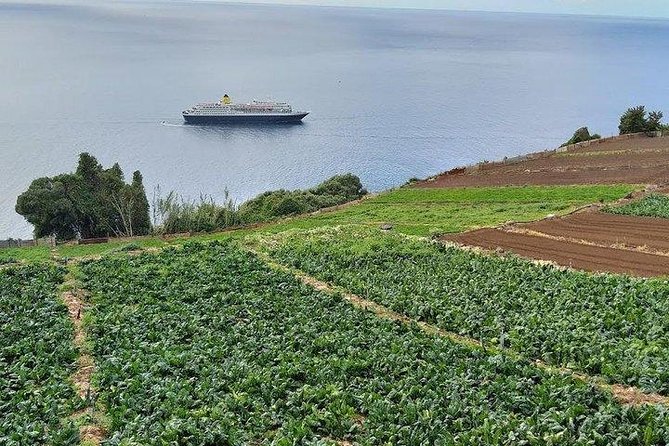
Madeira’s farming life is the real star here. Instead of spending the day moving between the island’s usual sights, you’ll follow old roads into working countryside, visit banana growers and dairy farms, and see how food reaches local tables. The family-run farms give the day a personal touch, while the small group keeps the pace easy.
I like the honest look at everyday Madeira, especially the banana operation and the dairy farm that supplies milk for Madeira cheese. I also like that lunch, drinks, snacks, tastings, and hotel pickup are included. The main drawback is the long day and uneven schedule: the tour is described as about six hours in one place and seven hours elsewhere, and extra pickup charges apply from some areas.
Key points to know before booking
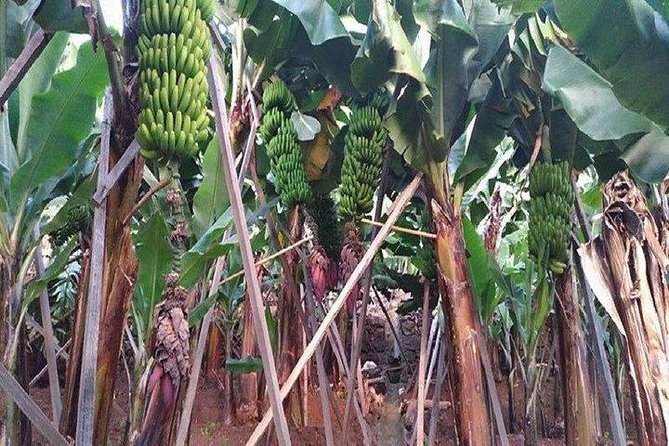
- Banana farming takes center stage: You visit a private family plantation and a large banana cooperative serving local supermarkets.
- The dairy stop is unusual: You see farms connected with Madeira’s milk, cheese, and beef production.
- Food is part of the tour: Traditional lunch, drinks, snacks, rum tasting, and honey cake are included.
- Groups stay small: The maximum is eight people, which suits anyone who prefers conversation over a crowded coach.
- The day crosses several parts of Madeira: Old roads, farm villages, mountain routes, and a cable car viewpoint add variety.
- Plan for practical details: Wear comfortable shoes, carry a jacket, and check pickup charges if you are outside the core service area.
Why this farm tour shows you a different Madeira
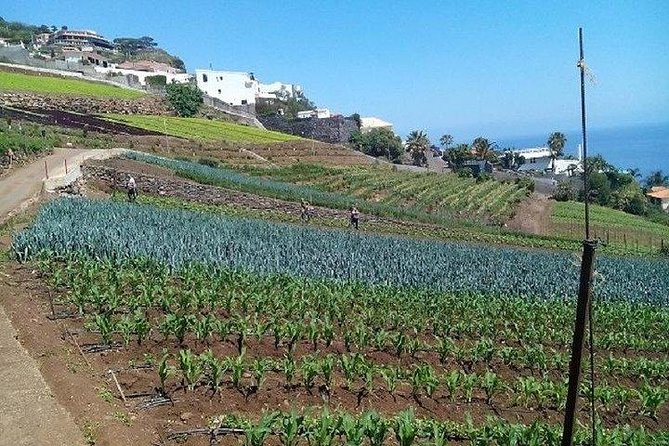
Funchal is easy to enjoy from its waterfront, markets, gardens, and steep streets. But Madeira makes more sense when you see the farms that support daily life on the island. This tour shifts your attention from postcard views to bananas, milk, vegetables, livestock, and local food.
I like that the day is not built around a string of quick photo stops. The farms give the tour a purpose. You are not simply looking at a pretty valley. You are learning what grows there, who works the land, and how local products move from farm to kitchen.
The small-group setup matters. With no more than eight people, you have a better chance to ask questions and hear personal stories from the guide. The experience is especially suited to you if you prefer a relaxed outing with explanation and conversation instead of a tightly packed sightseeing bus.
This is not a polished attraction with a large visitor center at every stop. Some parts are working farms, so the experience may feel practical and informal. That is part of its appeal, but you should not expect a museum-style presentation or a fixed schedule down to the minute.
Other Madeira days people book alongside this one:
- From Funchal: Ecological Catamaran Dolphin Whale Watching
★ 4.5 · 5,771 reviews - Madeira: Skywalk, Porto Moniz, Seixal, and Fanal 4WD Tour
★ 4.9 · 5,732 reviews - Funchal: Dolphin and Whale Watching Catamaran Cruise
★ 4.5 · 5,697 reviews
From Funchal to Madeira’s old farm roads
Pickup begins at 9:00 a.m., with hotel pickup and return included in the main service area. From there, you travel along older roads through different parts of Madeira. The drive itself is part of the day, offering changing views and a sense of how settlements and farms fit into the island.
The route covers enough ground to give you a broad picture of Madeira. You may see a shift from the built-up areas around Funchal to smaller villages and agricultural zones. The tour is not limited to one farm or one valley, so the driving helps connect the stops into a larger story.
The exact route can vary because the farms and visits need to be scheduled in advance. The practical result is that you should allow most of the day, even though one description puts the total at six hours including lunch and the headline duration says about seven hours.
That difference is worth noting if you are planning another activity for the afternoon. I would not book a timed museum visit, dinner reservation, or airport transfer too close to the expected return. Madeira’s roads can be slow, and a farm tour works better when it is not rushed.
Banana farming, from a family plot to a major cooperative
One of the strongest parts of the day is the visit to a private family banana farm. The personal connection gives the stop more character than a quick look at crops from the roadside. You can expect the guide to explain how bananas are grown and handled, with attention to the work involved after the fruit is picked.
The tour also visits the island’s largest banana cooperative. Seeing both a family operation and a larger organization lets you compare two sides of the same industry. The family farm shows the human scale. The cooperative shows how production is gathered and distributed on a broader level.
Banana handling is a particular highlight. The process is easy to overlook when you see bananas in a shop, but the fruit requires care from the field onward. The stop helps connect the crop to the supermarkets supplied by the cooperative.
I find this more useful than a generic agricultural talk because the subject is tied directly to Madeira’s economy and food supply. You get a clearer idea of why banana fields appear so often around the island and why farming remains part of local life.
The farm setting also means you should dress for walking. Comfortable shoes are required, not just suggested, since the day includes movement around agricultural areas and other working sites. A jacket is also sensible for the mountain portions, where conditions can feel cooler than in Funchal.
Fruit, vegetables, and the food behind lunch
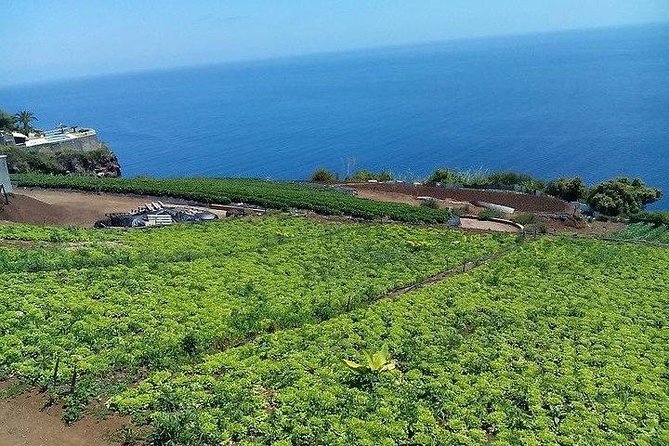
The route includes a fruit and vegetable farm that supplies much of the island’s supermarket produce. This stop adds another useful piece to the story. Madeira is often presented as a place of views and gardens, but local farms also provide the vegetables that appear in everyday meals.
You may find this part less dramatic than the banana plantation, especially if you are mainly seeking scenic views. Still, it gives the tour practical value. You are seeing food production rather than only hearing about local cuisine after it reaches a restaurant table.
That connection continues at lunch. A traditional restaurant meal is included, with fresh Madeiran vegetables and drinks. The lunch takes place in the village connected with the tour route, giving you a pause from the vehicle and a chance to eat at a local establishment rather than rely on a packed meal.
The menu is not specified in advance, so inform the guide if you are vegetarian or vegan. That request needs to be made ahead of time or early in the day. If you have serious dietary needs, it is wise to confirm what can be provided before booking.
Lunch is one of the tour’s better value points. A full meal during a seven-hour outing saves you the cost and trouble of finding a restaurant while moving between rural stops. It also gives the day a more natural rhythm: farm visits, a proper meal, then more countryside and viewpoints.
A different sort of day on the same island:
- Funchal: Enchanted Terraces, Porto do Moniz & Fanal 4WD Tour
★ 4.8 · 4,930 reviews - Porto Moniz, Seixal, Fanal Forest, Cliff Skywalk in Open Roof 4X4
★ 5.0 · 3,631 reviews - From Funchal: Best of Madeira’s West Tour
★ 4.7 · 3,463 reviews - Madeira: Best of the East Tour from Funchal
★ 4.7 · 3,364 reviews
Rum production and a sweet Madeiran pause
The rum factory adds another food and drink angle. You will see the production process and taste the rum, paired with traditional honey cake. This is a compact but distinctive stop, especially if you want more than agricultural scenery.
The tasting is included, so you do not need to budget separately for it. The honey cake also gives you a taste of a local specialty without turning the stop into a formal food tour. I would think of this as a cultural sample rather than a long tasting session.
The rum visit may be the most appealing part for anyone interested in traditional production. It breaks up the farm stops and shows another product tied to Madeira. If you do not drink alcohol, the tour description does not specify an alternative tasting, so check with the provider if that matters to you.
The guide’s role is important here. Lucy and Bryan are named in the available tour material, and the experience is built around guides who explain the work and answer questions. The strongest version of this tour depends less on a scripted speech and more on the guide’s ability to connect each stop to island life.
Dairy farms and Madeira’s working animals
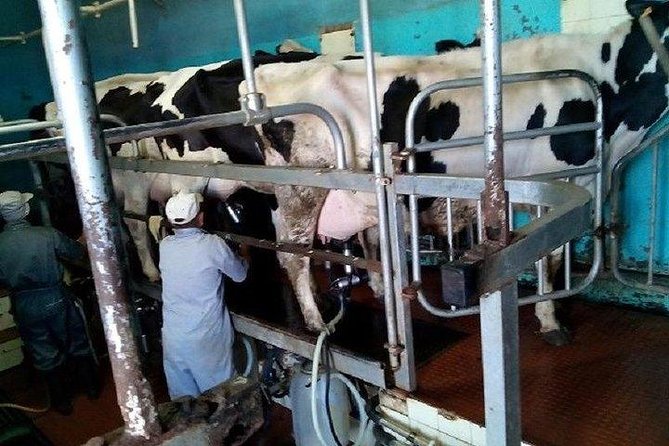
The dairy visit is the most unusual stop in the schedule. You see a cow farm that provides milk for the production of Madeira cheese, followed by a farm where beef cattle are kept. That gives you a direct look at two connected parts of livestock farming.
The dairy farm has special value because it links animals to a familiar local product. You are not only looking at cows in a field. You are seeing the source of the milk used in cheese production and learning how that part of the food chain works.
The beef farm adds another perspective. It may appeal to you if you want a broader picture of farming rather than a tour focused only on crops. It also makes the day more varied, with animals and agricultural work replacing another scenic viewpoint.
Safety is taken seriously around the animals, and you should follow the guide’s instructions. This is a working farm visit, not a petting zoo. Keep a respectful distance, wear sturdy shoes, and expect the setting to be practical rather than polished.
For families, the animal stops could be a highlight. Still, the tour is not stroller accessible, and the walking involved may be less convenient for very young children. Most people can participate, but anyone with limited mobility should ask about the walking conditions before booking.
A cable car viewpoint to finish the day
On the return drive, you can stop at a cable car viewpoint. This gives the day a visual finish after the farm visits and provides a chance to look out across the island from above.
The stop is not presented as a long cable car ride or a separate attraction. It is a scenic overlook connected with the return route. That distinction matters if you are expecting a full cable car experience. You should think of it as a viewpoint stop, not the main event.
I like the contrast. The farms show Madeira at ground level, with soil, animals, crops, and food production. The viewpoint pulls you back and lets you see the island’s steep terrain and scattered settlements in a wider frame.
Bring a jacket for this part of the route. Mountain weather can change quickly, and the tour specifically advises warm clothing. Comfortable shoes remain useful throughout the day, since rural stops and viewpoints may involve walking on uneven ground.
What the price includes, and where extra costs appear
At $100.55 per person, this is not the cheapest way to spend a day in Madeira. But the price includes hotel pickup and drop-off, a professional guide, transport, lunch, drinks, tastings, snacks, and visits to several farms. Those inclusions make the cost easier to justify than a simple sightseeing drive.
The small group is also part of the value. With a maximum of eight people, you are paying for a more personal format rather than a large coach. If you care about asking questions and having a guide respond to your interests, that can matter more than saving a modest amount on a larger group excursion.
Pickup is not equally priced everywhere. Transfers from Machico to Santana can add between 10 and 35 euros. Pickup from Ribeira Brava to Prazeres also carries an extra charge of 10 to 35 euros. Cruise pickup costs 4.50 euros per person, with children charged 2 euros.
Check your exact pickup point before paying. The headline price is strongest for people staying in the included hotel service area. If you are staying far away, the added transfer cost can change the value calculation.
There is no public transportation nearby, so reaching the meeting point independently may be difficult. The included pickup is one of the tour’s practical strengths, especially if you do not plan to rent a car.
Timing, clothing, and booking details
The tour does not run on weekends or public holidays. That limits your choices, so check the operating day before arranging the rest of your Madeira stay.
Bookings need to be made by 2:00 p.m. on the day before the tour. The farms and factory visits require advance scheduling, so a last-minute booking may not work. Confirmation is provided at booking.
Wear comfortable shoes and bring a jacket. You will walk at farms and may encounter cooler mountain weather. The activity is not suitable for pets and is not stroller accessible.
The tour requires good weather. If poor conditions cause cancellation, you can choose another date or receive a full refund. If the minimum number is not reached, the provider offers another date or experience, or a full refund.
For cancellations of your own booking, you need to cancel at least 24 hours before the start time for a full refund. Changes or cancellations inside that window are not accepted.
Who will enjoy this day most
I would choose this tour if you want to understand how Madeira functions beyond its main sights. It suits you if you like food, working farms, local stories, and small groups more than shopping or a packed list of monuments.
It is also a good fit if you are staying in Funchal without a rental car. The included pickup removes the need to navigate steep roads and rural routes yourself. You also get a guide to explain the farms, which is useful when you would otherwise pass them without knowing what you are seeing.
Families may enjoy the banana fields and cows, though the stroller restriction and walking should be considered. The tour is also a good match for couples and solo visitors who want a social day without joining a large bus group.
I would hesitate if you want a short outing, dislike farm environments, or need a perfectly fixed timetable. The day involves driving, rural stops, and a schedule that may shift around the farms. It is best approached as a full, flexible day.
Should you book the Agriculture Green Tour?
Book it if you want the Madeira behind the viewpoints: banana cultivation, local vegetables, dairy production, cattle, rum, honey cake, and a traditional lunch. The combination is unusually grounded, and the small group makes it easier to ask questions and hear personal stories from guides such as Lucy and Bryan.
Skip it if your priority is a fast tour of major landmarks or a full cable car ride. The value comes from the working farms and included food, not from dramatic attractions at every stop.
For most people who want an authentic rural day and do not have a car, I think the price is fair. Confirm your pickup fee, reserve before 2:00 p.m. the day before, wear proper shoes, and keep your afternoon open. That is the best way to enjoy the tour without worrying about the clock.
FAQ
How long does the Agriculture Green Tour last?
The experience is advertised as approximately seven hours. The tour details also describe it as six hours including lunch, so you should allow most of the day.
What time does the tour start?
Pickup starts at 9:00 a.m.
Is hotel pickup and drop-off included?
Yes, pickup and drop-off are included, though extra charges apply for some areas. Machico to Santana and Ribeira Brava to Prazeres pickups cost an additional 10 to 35 euros. Cruise pickup costs 4.50 euros per person, or 2 euros for children.
What food and drinks are included?
The tour includes lunch, drinks, tastings, and snacks. The day also includes a rum tasting with honey cake and a traditional meal with fresh Madeiran vegetables.
How many people can join the tour?
The maximum group size is eight people.
Does the tour run on weekends and public holidays?
No. The tour does not operate on weekends or public holidays.
What should I bring?
Bring comfortable shoes because the tour includes walking, and bring a jacket for the mountain areas. Tell the guide if you are vegetarian or vegan.
Just added around Madeira
- Madeira: Wine Safari Jeep Tour with Local Guide★ 3.9 · 6 reviews
- Visiting local Vineyard With Wine Tasting & Lunch included★ 5.0 · 6 reviews
- West Tour Porto Moniz★ 4.6 · 26 reviews
- Funchal: Maderia Island Off Road Jeep Tour with Swim Stop★ 5.0 · 11 reviews
- Tuk Tuk Monte Toboggan – Madeira Island★ 4.1 · 4 reviews
- Tuk Tuk Funchal CR7 – Madeira Island★ 4.8 · 4 reviews
- Lakes of Madeira- Alecrim Full day walk★ 4.0 · 9 reviews
- Full Day Open Roof 4×4 Unforgettable Northwest of Madeira★ 5.0 · 22 reviews