
Reviewed · MADEIRA
Funchal Agriculture Green Tour
Madeira’s agriculture is not a museum display. It is working land, family trade, and daily business. This six-hour tour takes you behind the scenes at a private banana farm, a government-run banana facility, an agriculture school, a long-established cattle farm, and an old rum factory in Porto da Cruz. You get a much clearer sense of how the island feeds itself and earns a living.
I especially like the private farm visits, where you can ask questions and see farmers at work, and the generous country lunch, with tapas, a main course, dessert, drinks, and coffee. The small group, limited to eight people, also makes these stops more personal than a large coach trip.
The main drawback is the packed schedule. You move between several sites in six hours, so this is not a slow day in the countryside. The rum machinery may not be operating outside the April to May sugarcane season, and banana tasting is not always possible in winter.
Key points to know before booking
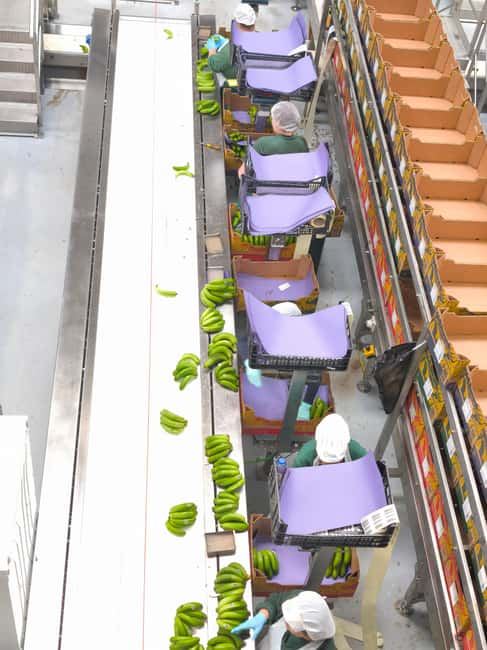
- Private banana farming: Walk through a working banana field and learn how the crop is grown, cut, sorted, packed, and sold.
- Madeira’s grafting traditions: Visit an agriculture school where local farmers buy trees and learn how grafting helps produce useful fruit varieties.
- Home-style country lunch: Expect local food, fresh bread, tapas, fish or meat, vegetables, dessert, drinks, and coffee.
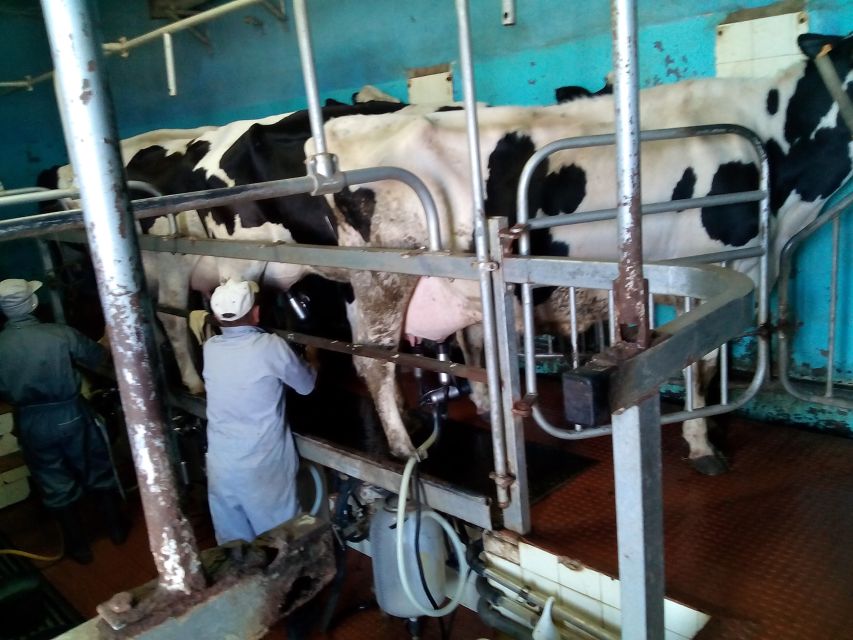
- A family cattle farm: See old milking methods at a farm that has supplied much of the milk used for Madeira’s requeijão cheese.
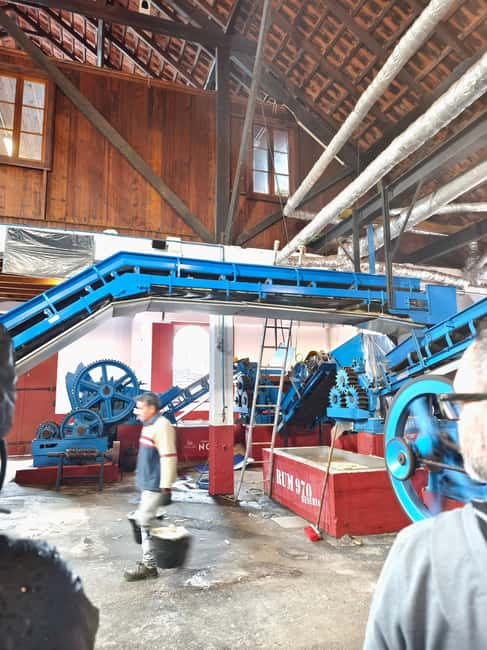
- Old steam-powered rum production: Visit a historic rum factory in Porto da Cruz, with machinery that still runs during the sugarcane season.
- Small-group transport: Pickup and return are available in Funchal, Caniço, Garajau, and Santa Cruz, with the group capped at eight.
Why Madeira’s farms tell a better story than a standard sightseeing loop
If you want only cliffs, viewpoints, and famous roads, this is not the right tour. If you want to understand how Madeira’s people use steep, limited farmland, it offers something different.
The island’s agriculture is shaped by small plots, careful planting, irrigation, family knowledge, and crops suited to local conditions. You see that in the banana fields, where the plants are grown commercially rather than simply displayed for photographs. You also see it at the agriculture school, where grafting methods help growers raise productive trees in a demanding setting.
I like this approach because it connects food on your plate with the people and places behind it. The day also gives you several kinds of countryside experience: tropical fruit near Funchal, cultivated trees at the agriculture school, open rural views around the north, cattle farming, and sugarcane production beside the sea.
The tour is led in English, Spanish, French, or German. Since no individual guide is named in the available details, your guide will be the agency representative who collects you. The strongest part of the experience will depend on how well that guide handles questions and brings the farming stops to life.
Other Madeira days people book alongside this one:
- From Funchal: Ecological Catamaran Dolphin Whale Watching
★ 4.5 · 5,771 reviews - Madeira: Skywalk, Porto Moniz, Seixal, and Fanal 4WD Tour
★ 4.9 · 5,732 reviews - Funchal: Dolphin and Whale Watching Catamaran Cruise
★ 4.5 · 5,697 reviews
Funchal’s banana fields and the business behind the fruit
The first agricultural stop is in the São Martinho area of Funchal. You visit a private banana field and see how the farmers care for the plants and manage the land.
This matters because Madeira’s banana trade is not just about seeing rows of broad green leaves. You get a look at the work involved in keeping a commercial crop going. The private setting allows for direct questions about planting, maintenance, cutting, and the practical side of the business.
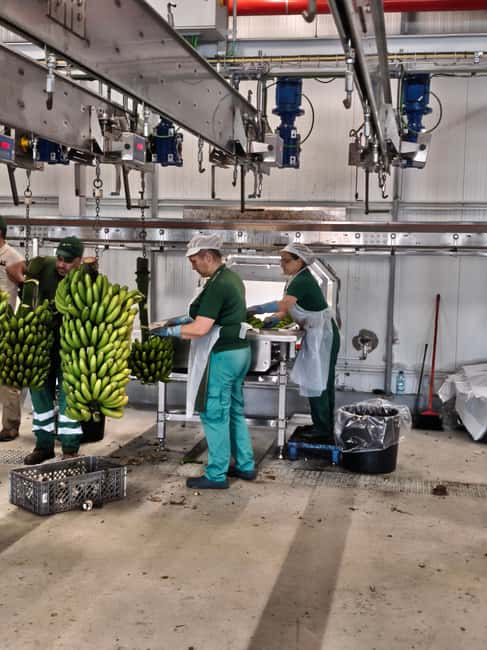
The next stop is GESBA, the government-run company responsible for managing the banana sector. Here you learn what happens after the bananas leave the field. The process includes selection and packing, which gives you a useful contrast with the earlier farm visit.
I find this pairing particularly effective. At the private field, you see cultivation. At GESBA, you follow the crop into the commercial system. A banana tasting is offered at the end, although you should not count on it during winter, when ripe fruit may not be available.
Allow around 40 minutes for the first guided visit and 45 minutes at the banana business. That is enough time for a clear introduction, but not enough for a long agricultural workshop. Wear shoes that can handle uneven ground, and bring a jacket because Madeira’s weather can change as the road climbs and descends.
The agriculture school and Madeira’s grafting know-how
The tour then follows an old road to the agriculture school at Caminho do Arieiro. Farmers come here to buy trees, and the grounds include international varieties planted many years ago alongside local fruit trees.
The school visit is useful for anyone who likes gardens, food production, or practical plant knowledge. You learn about grafting, a method used to join parts of different plants so the resulting tree can produce desired fruit or grow more successfully.
You may see avocados, lemons, and other fruit trees. When fruit is in season, tasting may be offered. The exact selection depends on the time of year, so think of this as a guided look at plant cultivation rather than a guaranteed fruit-tasting stop.
This is a one-hour visit, making it one of the longer stops of the day. I like that the tour does not treat agriculture as a quick photo opportunity. You have time to see the grounds and understand why growers use particular methods.
There is one practical point to keep in mind: this stop may appeal more to adults and older children than to very young children. The tour is not suitable for children under six, and the day involves several educational visits rather than a single animal-focused attraction.
A country lunch with Madeira on the table
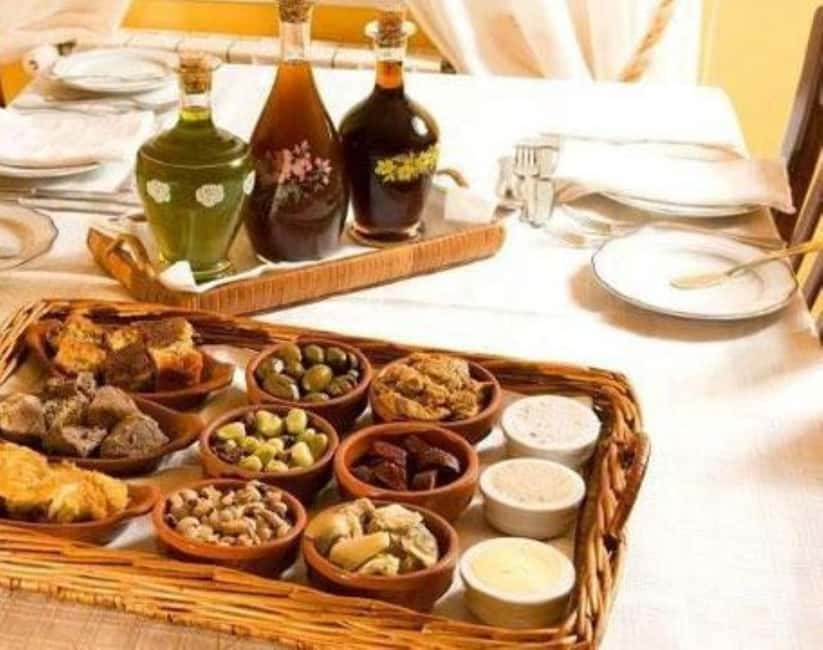
Lunch takes place in a cozy house restaurant in the rural countryside around Santana. The setting is intended to feel like a local meal at home rather than a formal restaurant stop.
The meal includes fresh-baked bread, tapas with local food, a choice of fish or meat, fresh vegetables, homemade dessert, drinks, and coffee. That makes the $100 price easier to assess. You are not paying only for transportation and admissions. A substantial meal with drinks is part of the day, along with several private or guided visits.
The food is also an important break in the schedule. By this point, you have spent the morning learning about bananas and fruit trees, so a sit-down meal gives you time to rest and talk with the guide and other people in your small group.
I would not book this tour if you need strict control over your meal or have dietary requirements that were not discussed in advance. The supplied details give fish or meat as the main choices, but they do not specify vegetarian, vegan, allergy, or other special menus.
The countryside setting is a strong part of the lunch experience. You are away from the central streets of Funchal, in an area where farming is still part of the view and daily life.
A different sort of day on the same island:
- Funchal: Enchanted Terraces, Porto do Moniz & Fanal 4WD Tour
★ 4.8 · 4,930 reviews - Porto Moniz, Seixal, Fanal Forest, Cliff Skywalk in Open Roof 4X4
★ 5.0 · 3,631 reviews - From Funchal: Best of Madeira’s West Tour
★ 4.7 · 3,463 reviews - Madeira: Best of the East Tour from Funchal
★ 4.7 · 3,364 reviews
Porto da Cruz and the old rum machinery
After lunch, the route continues to Porto da Cruz, a sugarcane-growing area on Madeira’s north coast. You visit one of the island’s oldest rum factories and see the steam machines used in production.
The factory visit lasts about 40 minutes. It is short, but it adds an industrial side to the day. Instead of seeing only farms and food on the table, you see how sugarcane becomes part of Madeira’s spirits tradition.
The machines operate during the sugarcane season, usually from April through May. If you visit then, you may see the working equipment in action. At other times, the machinery may be silent, so set your expectations accordingly. The tour includes a rum tasting, which is a pleasant way to finish the stop, but you should pace yourself if you are still driving or planning another activity afterward.
Porto da Cruz is also a scenic setting, with the factory visit adding more character than a simple tasting room. One family described the rum stop as an unexpected highlight, helped by the beautiful remote beach nearby. The beach is part of the surrounding area, but the supplied schedule does not promise a beach visit or swimming time, so do not pack this as a coastal leisure excursion.
The century-old cattle farm and Madeira’s cheese tradition
The final major visit is to a private cattle farm with more than a century of family involvement in the trade. The farm provides much of the milk used to make requeijão, a well-known fresh cheese from Madeira.
You see older milking techniques and learn about the farm’s role in local food production. This stop gives the tour another useful change of pace. Bananas and fruit trees show how Madeira grows plants in small plots, while the cattle farm shows the animal side of rural life.
The setting is described as a beautiful rural region with fine views. You may also see animals along the way, which can make this a good choice for families with children old enough to manage a full six-hour outing. Still, this is a working farm visit, not a petting zoo. The focus is on farming practices and the family trade.
The stop is listed at Talho do Caniço and lasts about 40 minutes. Because the route includes several farms and ends with the drive back to Funchal, the day can feel full. I would wear shoes with a firm sole and clothing that can handle cooler air outside the city.
What the small group and transport add
Pickup is available from hotels in Funchal, Caniço, Garajau, and Santa Cruz, with return to the same general areas. Pickup times can shift by around 15 minutes because of traffic, roadworks, or accidents, so you should wait in the hotel lobby 10 minutes before the scheduled time and check your email or WhatsApp for the final details.
People staying in Ponta do Sol, Calheta, Santana, or São Vicente do not receive the same included pickup arrangement. They can meet the guide at a stated meeting point near the Hotel Madeira Panoramico parking area, which is free. Pickup from Santa Cruz, Calheta, and Ponta do Sol is not included, so confirm your meeting point before paying.
The group is limited to eight participants. That number matters at private farms. You can hear explanations more easily, ask questions, and move through smaller spaces without a large crowd. It also makes the vehicle portion less tiring than a full-size coach tour.
The tradeoff is that the day follows a set route. You are not choosing how long to stay at each farm, and delays on Madeira’s roads can shorten time at later stops. This is normal for a six-hour excursion with several appointments, but anyone who prefers an unhurried pace should know what they are booking.
Is $100 a fair price?
At $100 per person, this tour is not the cheapest way to spend a day in Madeira. Its value comes from what is bundled into the price.
You receive hotel transport in the main pickup areas, a live guide, entrance to the banana farm, banana business, agriculture school, and cattle farm, a full local lunch with drinks and coffee, plus rum tasting. You also cover a wide section of Madeira, from Funchal to rural Santana and Porto da Cruz, without arranging a rental car or working out the route yourself.
The private visits are the strongest reason to consider the cost. A normal sightseeing bus may show you farmland from the road. This experience takes you onto working agricultural sites and explains what happens there.
I consider the price reasonable if you value food, local production, and access to places not normally set up for casual sightseeing. It is less attractive if your priority is major viewpoints, hiking, swimming, or free time in towns.
Free cancellation up to 24 hours before the activity and the option to reserve now and pay later also reduce the risk of booking, especially when Madeira weather or road conditions may affect your plans.
Who should book this Madeira agriculture tour?
I would recommend it to you if you enjoy food, farming, small businesses, and conversations about how a place works. It is also a good choice if you have already seen some of Funchal’s main sights and want a day with more contact with rural Madeira.
Families with children over six may enjoy the animals and hands-on subject matter, though the six-hour schedule is long for a child who needs constant activity. The educational stops and country lunch work especially well for older children.
This is also a strong fit for anyone who does not want to drive Madeira’s winding roads. The tour handles the transport and links several places that would be awkward to combine independently.
I would skip it if you want a relaxed beach day, a serious rum-tasting session, or a tour centered on dramatic viewpoints. You should also think twice if you use a wheelchair, since the experience is not suitable for wheelchair users and includes private farm settings.
Bring comfortable shoes and a warm layer. Madeira can feel warm in Funchal and cooler in rural or higher areas on the same day.
My verdict: a useful look at working Madeira
I like this tour because it gives you food for thought as well as food to eat. You see bananas before and after packing, learn why grafting matters, eat a proper rural meal, visit a cattle farm tied to requeijão production, and finish with sugarcane spirits in Porto da Cruz.
The schedule is busy, and some seasonal elements are not guaranteed. Still, the mix is unusually practical and varied. Book it if you want to meet the working side of Madeira and are happy to trade a little free time for access, context, and a meal that is part of the experience.
FAQ
How long does the Funchal Agriculture Green Tour last?
The tour lasts six hours, including transport between the agricultural sites, lunch, and the return drive.
Where can I be picked up?
Included pickup and drop-off are available from hotels in Funchal, Caniço, Garajau, and Santa Cruz, according to the supplied tour details. Check the final pickup message for your exact time and meeting point.
Is pickup from Calheta or Ponta do Sol included?
No. Pickup from Santa Cruz, Calheta, and Ponta do Sol is not included. People staying in Ponta do Sol, Calheta, Santana, or São Vicente can meet the guide at the stated meeting point near the Hotel Madeira Panoramico parking area.
What languages does the guide speak?
The tour is offered with a live guide in English, Spanish, French, or German.
Is lunch included?
Yes. Lunch includes local food, fresh bread, tapas, a choice of fish or meat, vegetables, dessert, drinks, and coffee.
Will I taste bananas?
A banana tasting is offered at the banana business, but ripe bananas are not always available during winter.
Will the rum factory machines be operating?
The steam machines operate during the sugarcane season, generally in April and May. At other times, you may see the machinery without it being in operation.
Is the tour suitable for children or wheelchair users?
Children under six cannot join the tour, and the experience is not suitable for wheelchair users. Comfortable shoes and a warm layer are recommended for all participants.
Just added around Madeira
- Madeira: Wine Safari Jeep Tour with Local Guide★ 3.9 · 6 reviews
- Visiting local Vineyard With Wine Tasting & Lunch included★ 5.0 · 6 reviews
- West Tour Porto Moniz★ 4.6 · 26 reviews
- Funchal: Maderia Island Off Road Jeep Tour with Swim Stop★ 5.0 · 11 reviews
- Tuk Tuk Monte Toboggan – Madeira Island★ 4.1 · 4 reviews
- Tuk Tuk Funchal CR7 – Madeira Island★ 4.8 · 4 reviews
- Lakes of Madeira- Alecrim Full day walk★ 4.0 · 9 reviews
- Full Day Open Roof 4×4 Unforgettable Northwest of Madeira★ 5.0 · 22 reviews