
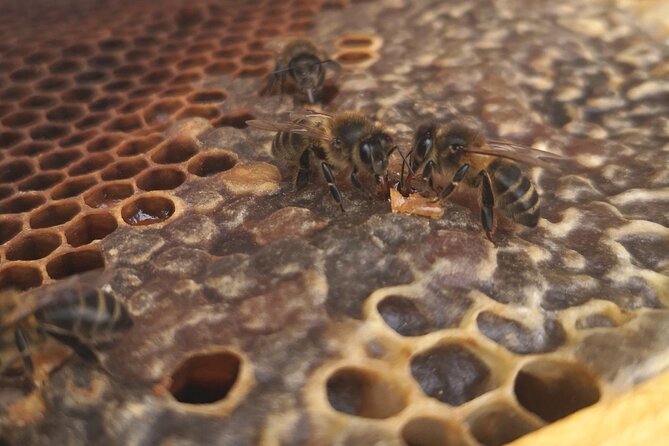
Reviewed · MADEIRA
Amazing experience with Bees, honey and Pollen in Madeira Island
The most unusual part of this Madeira experience is simple: you get close enough to hold honey frames and observe living bees while Marcia and Helder explain what is happening inside the hive. This is not a quick honey tasting. It is a hands-on visit built around the work, order, and fragile balance of a working colony.
I like two things here. First, the hosts make safety part of the experience rather than an afterthought. Second, the tasting brings together several local flavors, including different honeys, fresh pollen, cheese, and regional cider. The chance to watch bees being born adds another memorable detail.
The main consideration is timing. The activity is advertised as about four hours, yet the listed Monday opening window runs from 3:00 PM to 5:30 PM. I would confirm the exact start and finish time before booking, especially if you have evening plans elsewhere on Madeira.
Key points at a glance
- Touch the honey frames: You can pick up frames and watch the bees at close range under the hosts’ direction.
- Learn how a hive works: The visit begins with a practical explanation of hive structure, bee roles, and the importance of bees to the ecosystem.
- Look for the queen bee: Marcia and Helder will try to show you the queen, though finding her depends on the colony and conditions.
- Taste more than honey: The final tasting includes several honeys, fresh pollen, cheese, and regional cider.
- Private and personal: Only your group takes part, allowing the hosts to adjust the pace and presentation to you.
- Weather matters: Poor weather can lead to a new date or a full refund.
Meeting bees in Santo António da Serra
This experience takes place in Santo António da Serra, a quieter part of Madeira rather than a major city attraction. That location helps set the tone. You are going to a place connected to beekeeping, not simply entering a room where honey products have been placed on a table.
The activity is private, so only your group participates. That matters more here than it would on a standard sightseeing stop. A small setting gives you room to ask questions, listen carefully, and take your time when the hives are opened.
Marcia and Helder lead the visit together. Their approach is personal and adaptable, and the experience can be adjusted according to the people in your group. If you already know something about bees, you can ask more specific questions. If the subject is new to you, the introduction gives you the basic terms before you approach the hives.
I would not book this expecting a fast-paced attraction with a long list of stops. The appeal is the close contact with one subject. You spend the time understanding the colony, seeing how the hive is arranged, and noticing what the bees are doing.
Other Madeira days people book alongside this one:
- From Funchal: Ecological Catamaran Dolphin Whale Watching
★ 4.5 · 5,771 reviews - Madeira: Skywalk, Porto Moniz, Seixal, and Fanal 4WD Tour
★ 4.9 · 5,732 reviews - Funchal: Dolphin and Whale Watching Catamaran Cruise
★ 4.5 · 5,697 reviews
Starting with the hive’s basic design
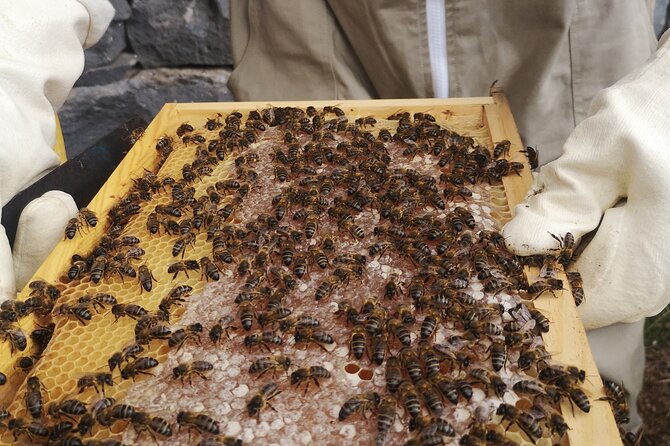
The first part is a welcome and a short explanation of how a hive is structured and functions. This introduction is useful because a hive can look like a simple wooden box from the outside. Inside, it is organized around different jobs, spaces, and stages of bee life.
The hosts explain the importance of bees to the ecosystem before taking you to the hives. That gives the visit a wider purpose. You are not only learning how honey reaches a jar. You are also seeing why the health of bee colonies matters beyond the beekeeper’s work.
The presentation is likely to be most useful if you pay attention to the different types of bees in the colony. The hosts aim to show you the queen, worker bees, and other bees, and they explain how the colony is organized. Since the queen may be difficult to spot, the goal is an attempt rather than a guarantee.
This opening also helps you understand what you are looking at later. Without it, a frame covered with moving bees can be hard to read. With the explanation, you have a better chance of noticing the difference between an ordinary cluster of bees and signs of activity inside the colony.
Opening the hives and reading bee behavior
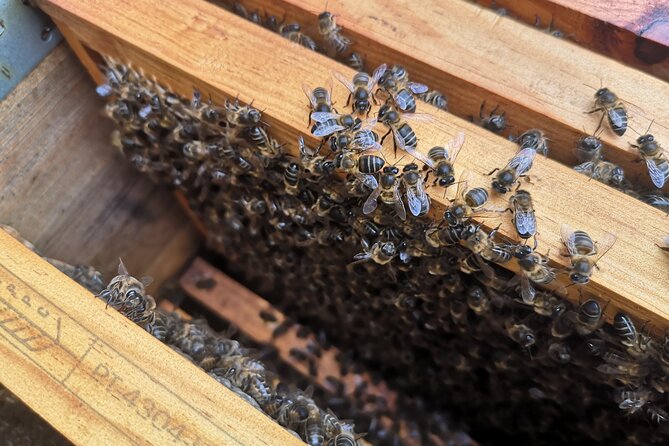
The central part of the visit is the trip to the hives. Marcia and Helder describe the arrangement of the colony and show you how the hive is organized. They then give you the chance to observe the bees at close range.
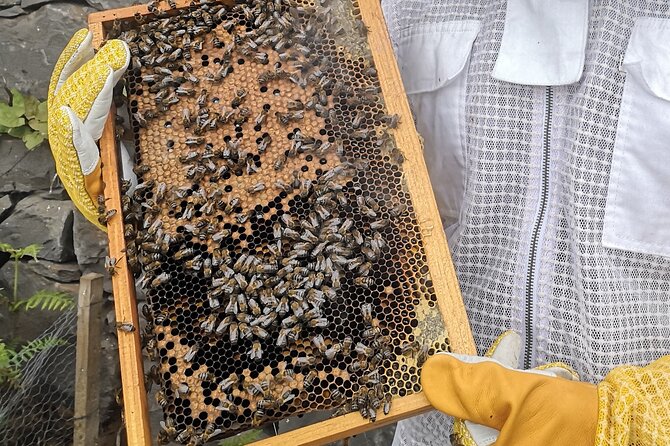
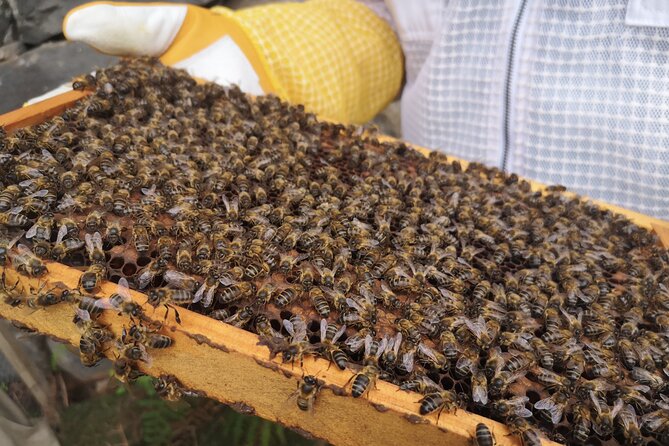
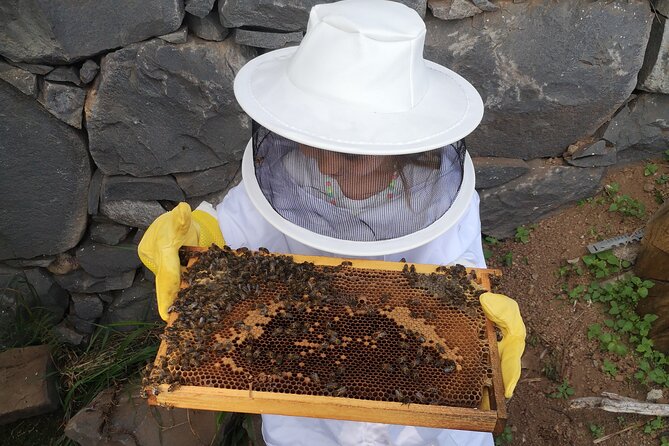
The most hands-on detail is the opportunity to pick up honey frames. You are not simply watching from several feet away. Under the hosts’ guidance, you can handle a frame and examine the honey and bees on it.
This is where the safety briefing matters. Bees are living insects, and the experience depends on approaching them in a calm, controlled way. The hosts emphasize safe and peaceful contact, which should make this more comfortable if you have never been near a hive.
You should still treat the activity seriously. If you are nervous around bees, tell the hosts early. The private format means they can spend more time explaining what is happening instead of rushing the group from one step to the next.
The chance to watch bee behavior up close is more valuable than simply hearing facts. You can connect the explanation of the hive to what is in front of you. You might notice how the bees cluster, move, and work across the frame. The exact activity will vary, but the point is to see a colony as an organized living community rather than a source of honey alone.
Searching for the queen and watching new bees
Marcia and Helder will try to show you the queen bee. This can be one of the most interesting parts of the visit, but it should be treated as a possibility, not a promised sighting. A queen may be present without being easy to find among many moving bees.
The hosts also describe and show different types of bees. This adds a useful layer to the visit because it connects appearance with function. You begin to see that the hive is not made up of identical insects performing the same job.
A particularly unusual detail is the chance to watch the birth of bees. The experience description does not promise that you will see a new bee emerge every time, but it identifies this as something the hosts may show you. Timing and conditions inside the colony will affect what is visible.
That uncertainty is part of the nature of the activity. This is not a staged animal show where every moment happens on schedule. You are visiting a working hive, so some parts depend on what the colony is doing that day.
A different sort of day on the same island:
- Funchal: Enchanted Terraces, Porto do Moniz & Fanal 4WD Tour
★ 4.8 · 4,930 reviews - Porto Moniz, Seixal, Fanal Forest, Cliff Skywalk in Open Roof 4X4
★ 5.0 · 3,631 reviews - From Funchal: Best of Madeira’s West Tour
★ 4.7 · 3,463 reviews - Madeira: Best of the East Tour from Funchal
★ 4.7 · 3,364 reviews
Honey, fresh pollen, cheese, and cider
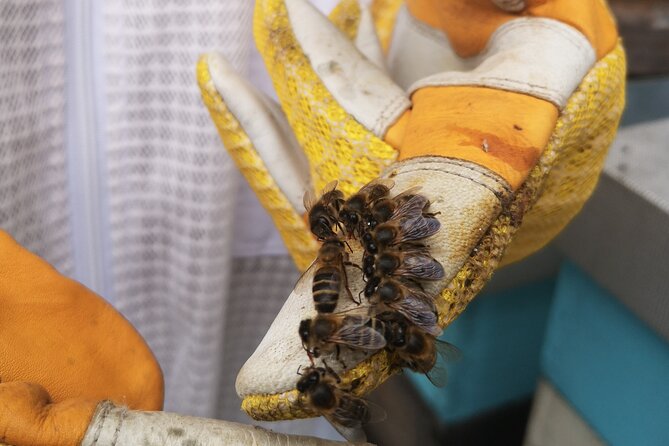
After the hive visit, the experience moves to a tasting. You sample several types of honey along with fresh pollen, regional cheese, and regional cider.
This tasting gives the hands-on portion a satisfying finish. You have just seen where honey comes from, so the food on the table has a clear connection to the earlier part of the visit. Sampling several honeys also lets you compare them rather than treating honey as one single flavor.
Fresh pollen is an especially distinctive inclusion. It is not the item most people expect to find at a basic honey stop, and it helps show the wider range of products connected to beekeeping. The cheese and cider make the tasting feel more like a local food experience than a product demonstration.
One review also refers to poncha as part of the social side of the visit. The stated tasting includes regional cider, while poncha is not listed as a guaranteed tasting item, so I would not book on the assumption that poncha will be served. You can ask Marcia and Helder about the current tasting when arranging your visit.
The hosts’ hospitality is an important part of the appeal. The experience has been described as feeling like time spent with old friends, which fits the private, personal format. That does not mean every group will have the same conversation or pace, but you can expect the atmosphere to be more relaxed than a large commercial tour.
Why the private format matters
Only your group participates. This gives the experience a level of flexibility that is especially helpful during the hive visit.
You can ask questions without holding up a busload of people. You can also tell the hosts if you want more explanation before handling a frame or if you would prefer to observe first. For people who are curious but slightly uneasy around bees, that control can make the difference between an enjoyable visit and an uncomfortable one.
The private format also suits amateur beekeepers. One couple with beekeeping experience found the Madeira visit useful as a way to compare the work of local beekeepers with what they already knew. If you keep bees yourself, bring questions about hive organization, local practice, and the colony’s behavior.
For complete beginners, the same private setting works in another way. You do not need previous knowledge to take part. The visit begins with the basic structure of the hive, then moves toward the more active and hands-on elements.
The experience is also described as being personalized for each client. I would read that as a flexible approach rather than a guarantee that every request can be met. The exact balance between explanation, observation, and tasting will depend on your group and on the conditions at the hives.
Price, length, and the real value
The price is $138.58 per person for about four hours. That is not a low-cost tasting, so the value depends on what you want from your Madeira activities.
If you only want to sample honey, this is more than you need. You could find simpler ways to taste local products. The price begins to make more sense if you value direct access to a working hive, a private host-led explanation, hands-on contact with honey frames, and a tasting afterward.
You are also paying for the small-group format and the time spent with Marcia and Helder. This is not a large group moving through a fixed presentation. The hosts can focus on your questions and adjust the pace to your comfort.
The experience lasts around four hours, which makes it a substantial half-day activity. That length is useful because the visit has several stages: introduction, hive observation, frame handling, discussion of the bees, and tasting. It also means you should not treat it as a quick stop between tightly scheduled attractions.
The timing information deserves attention. The listed operating period runs from September 1, 2023, through November 25, 2026, with Monday hours shown as 3:00 PM to 5:30 PM. Since that window is shorter than the advertised four-hour duration, confirm the current schedule and exact meeting time before paying.
The activity begins and ends at the meeting point in Santo António da Serra. No transport from another part of Madeira is included in the information provided, so plan around reaching that starting point yourself unless the provider tells you otherwise.
Weather, comfort, and who should book
The experience requires good weather. If poor weather causes cancellation, you will be offered another date or a full refund. That policy makes sense for an activity centered on visiting outdoor hives, where conditions can affect both safety and what you can see.
I would choose a day when you can keep your schedule flexible. Even if the visit goes ahead, weather and hive activity may affect the hands-on portion. The queen may not be found, and the birth of a bee may not be visible. Those are natural limits, not signs that the experience has failed.
This activity suits you best if you:
- Want a private and unusual Madeira experience
- Are curious about how honey is made
- Enjoy food tastings with a clear connection to local work
- Are comfortable being near bees under instruction
- Have an interest in beekeeping, ecology, or small-scale producers
- Prefer a personal visit to a large sightseeing group
It may not suit you if you want a guaranteed queen sighting, a fixed series of visual highlights, or a short activity that fits neatly into a crowded day. It is also worth thinking carefully about your comfort with bees before booking, even though the hosts focus on safe and peaceful interaction.
Most people can participate, according to the activity information. Still, the visit includes outdoor hive contact and handling frames, so you should discuss any personal concerns with the provider before arrival.
Booking terms and practical planning
Confirmation is provided when you book, and the activity uses a mobile ticket. The meeting point is in Santo António da Serra, and the experience returns there at the end.
You can cancel for a full refund if you do so at least 24 hours before the start time. Cancellations made within 24 hours are not refunded, and changes inside that period are not accepted. The cut-off follows local Madeira time.
Because poor weather can affect the visit, check the forecast before you travel to the meeting point. If the provider cancels because conditions are unsuitable, you can choose another date or receive a full refund.
I would also confirm three points before the day: the exact start time, the expected four-hour duration, and the current tasting list. The published schedule and duration do not match neatly, and the tasting details mention cider while one account refers to poncha. A quick confirmation removes avoidable confusion.
Should you book this Madeira bee experience?
I would book it if you want a personal, offbeat activity that combines nature, local food, and direct contact with a working hive. The best parts are the private setting, the chance to handle honey frames, the effort to show you the queen, and the tasting of honey, pollen, cheese, and cider.
I would skip it if you only want a quick food sample or if being close to bees makes you uneasy. At $138.58 per person, the value lies in the full four-hour visit and the time with Marcia and Helder, not in the honey alone.
Before booking, confirm the Monday timing and ask what will be served at the tasting. If those details work for your schedule, this is a thoughtful choice for seeing a quieter, more working side of Madeira.
FAQ
Where does the bee experience take place?
The activity starts and ends in Santo António da Serra, Portugal, on Madeira Island.
How long does the experience last?
The experience lasts approximately four hours.
What happens first?
Marcia and Helder welcome you with a brief presentation about the structure and function of a hive and the importance of bees to the ecosystem.
Can I visit the hives?
Yes. The activity includes a visit to the hives, where the hosts explain how the hive is organized and show different types of bees.
Can I touch the honey frames?
Yes. Participants can pick up honey frames and observe the bees closely under the hosts’ direction.
Will I see the queen bee?
The hosts will try to show you the queen bee, but a sighting is not guaranteed.
Can I watch bees being born?
The experience includes the possibility of watching the birth of bees. What you see can depend on conditions inside the hive.
What food and drink are included?
The tasting includes various honeys, fresh pollen, cheeses, and regional cider.
Is this a private activity?
Yes. Only your group participates in the activity.
What happens if bad weather cancels the tour?
You will be offered another date or a full refund if poor weather causes the activity to be canceled.
Just added around Madeira
- Madeira: Wine Safari Jeep Tour with Local Guide★ 3.9 · 6 reviews
- Visiting local Vineyard With Wine Tasting & Lunch included★ 5.0 · 6 reviews
- West Tour Porto Moniz★ 4.6 · 26 reviews
- Funchal: Maderia Island Off Road Jeep Tour with Swim Stop★ 5.0 · 11 reviews
- Tuk Tuk Monte Toboggan – Madeira Island★ 4.1 · 4 reviews
- Tuk Tuk Funchal CR7 – Madeira Island★ 4.8 · 4 reviews
- Lakes of Madeira- Alecrim Full day walk★ 4.0 · 9 reviews
- Full Day Open Roof 4×4 Unforgettable Northwest of Madeira★ 5.0 · 22 reviews